

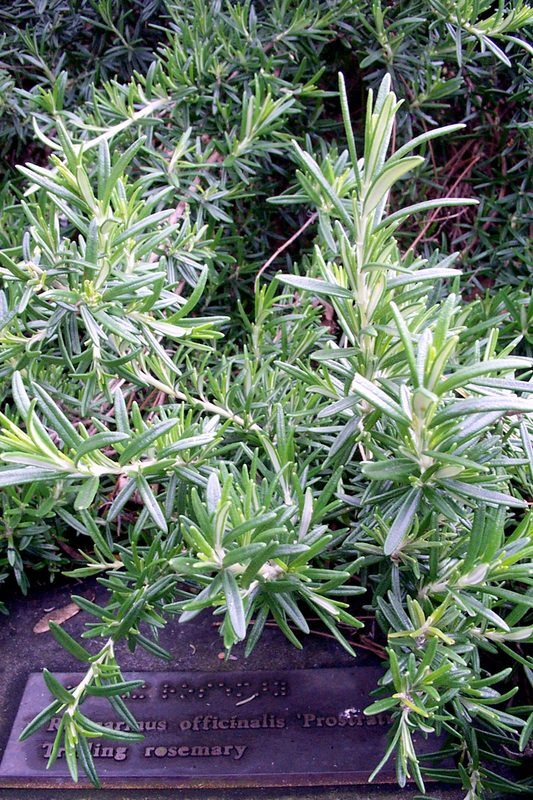
Photo: CGP Grey · CC BY 2.0 · Source
Rosemary
Salvia rosmarinus (syn. Rosmarinus officinalis)
Family: Labiatae | Parts Used: Leaves
Rosemary is a common culinary herb with strong medicinal applications. It improves circulation, supports memory and mental clarity, relieves headaches, aids digestion, and strengthens immunity during colds and flu. The volatile oils in the leaf, including camphor, cineole, and borneol, account for most of its therapeutic activity. In TCM terms, rosemary is spicy and cool in nature.
Traditional Uses
- Enhancing memory and mental clarity
- Relieving headaches and migraines
- Improving circulation
- Supporting digestion and addressing indigestion
- Strengthening immunity during colds and flu
- Promoting hair growth and scalp health (external use)
- Skin health (external application)
Properties
Key Constituents
- Volatile oils: Borneol, Camphene, Camphor, Cineole, Limonene, Linalool
- Flavonoids
- Ursolic acid
- Oleanolic acid
Preparations & Dosage
- Herbal infusion: 1-2 tsp herb per cup boiling water, or 1 oz dried herb per pint of water. Up to 3 cups daily.
- Tincture: 15-30 drops, up to 3 times daily.
- Infused oil (topical): Added to shampoo for scalp massage to stimulate hair growth.
- Essential oil: Steam inhalation for headaches and migraines, or diluted and rubbed on scalp for hair growth. Do not ingest rosemary essential oil.
TCM Profile: Spicy, cool.
Spiritual & Folk Uses
- Traditionally used for protection of the home: burned as incense or planted by the door.
- Traditionally used to attract good luck: incense or planted near the entrance.
- Used in cleansing spiritual baths.
Bonnie's Notes
I use the herb and essential oil in remedies for headache and focus.
Cautions
- Safe as a culinary herb. Medicinal doses may cause seizures in individuals with seizure disorders.
- Not recommended in traditional medicinal doses during pregnancy, as rosemary may stimulate the uterus.
- May interact with blood thinners, ACE inhibitors, diuretics, and lithium.
- Rosemary essential oil should not be ingested.
Habitat & Growing Conditions
Native to the Mediterranean region (Portugal, Spain). Grown in US zones 6-8 and also successfully grown indoors. Prefers well-drained, partly dry soil in full sun.
Related Articles
Sources & Research
The Way of Herbs, Michael Tierra, p187
The New Holistic Herbal, David Hoffmann, p229
Herbs: An Illustrated Encyclopedia, Kathi Keville, p158
Published Research:
Traditional effects of rosemary (Rosmarinus officinalis L.) and its active constituents on nervous system disorders | Iranian Journal of Basic Medical Sciences (2020)
Rosmarinus officinalis L. (rosemary) as traditional and prophylactic agent | Journal of Biomedical Science (2019)
Rosemary (Rosmarinus officinalis L., syn Salvia rosmarinus Spenn.) and Its Topical Applications: A Review | Plants (Basel, Switzerland) (2020)
Rosmarinus officinalis essential oil: A review of its phytochemistry, anti-inflammatory activity, and mechanisms of action | Journal of Ethnopharmacology (2019)
These statements have not been evaluated by the Food and Drug Administration. This information is not intended to diagnose, treat, cure, or prevent any disease. If you are under the care of a health care provider or taking prescription medication, check with your provider before using any herbal supplement.