

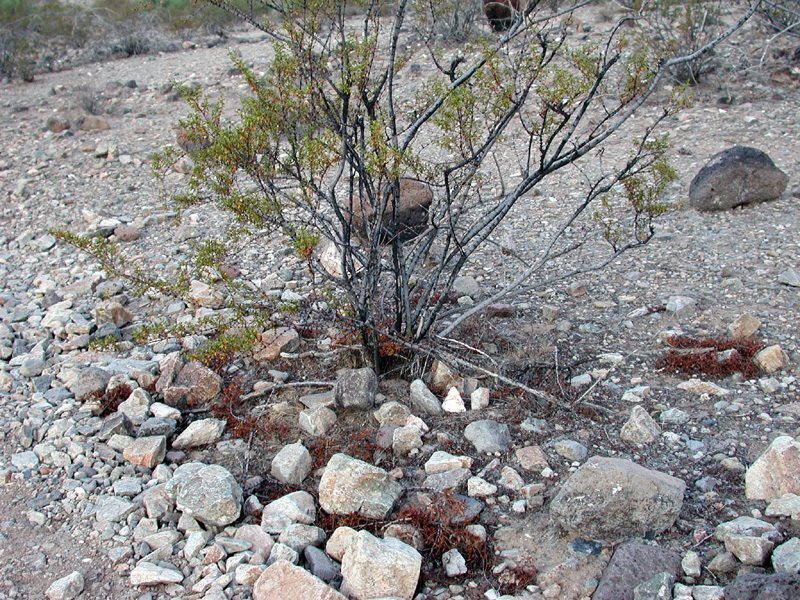
Photo: Mike · CC BY-SA 3.0 · Source
Chaparral
Larrea tridentata
Family: Zygophyllaceae | Parts Used: Leaves
Chaparral is a potent desert plant traditionally used for its purifying properties. Known for its strong antioxidant content, particularly nordihydroquaiaretic acid (NDGA), it has long been used in Native American herbalism to support respiratory health, cleanse the blood, and address infections both internally and externally. Its bitter and acrid nature reflects its role as a serious detoxifier, generally reserved for short-term use under the guidance of an experienced practitioner.
Traditional Uses
- Traditionally used for colds and flus
- Supports respiratory health during infections
- Traditionally used for diarrhea and digestive complaints
- Addresses urinary tract infections
- External application for inflammation, wounds, and skin conditions
- Blood purification and detoxification
- Traditionally used as a parasiticide
Properties
- Alterative
- Blood purifier
- Antibiotic
- Antiseptic
- Parasiticide
- Expectorant
- Antitumor (under research)
- Diuretic
Key Constituents
Preparations & Dosage
- Infusion: 3-6 grams dried herb in 1 cup boiling water; or 1 oz dried herb per 1 pint water.
- Tincture: 15-30 drops.
- External: Poultice, fomentation, or liniment for wounds and skin conditions.
TCM Profile: Bitter, acrid, slightly salty, cool.
Cautions
- Serious risk of hepatotoxicity (liver damage). Multiple cases of liver failure have been reported with chaparral use. The FDA has issued warnings about chaparral-containing products.
- Do not use during pregnancy.
- Consult with your health care provider before taking if you have a history of liver or kidney disease.
- Not recommended for long-term use. Short-term use only, with medical supervision.
- Discontinue immediately if nausea, fever, fatigue, or jaundice occurs.
- May interact with medications metabolized by the liver (CYP450 pathway).
- Use only under the guidance of an experienced practitioner.
Habitat & Growing Conditions
Native to the deserts of the southwestern United States and Mexico. Grows in US zone 8. Prefers dry, rocky soil and full sun. Also known as creosote bush.
Related Articles
Sources & Research
The Way of Herbs, Michael Tierra, p. 117
Published Research:
Larrea tridentata and its Biological Activities | Current Topics in Medicinal Chemistry (2021)
Phytochemical Compounds and Pharmacological Properties of Larrea tridentata | Molecules (2022)
Larrea tridentata (Creosote bush), an abundant plant of Mexican and US-American deserts and its metabolite nordihydroquaiaretic acid | Journal of Ethnopharmacology (2005)
Transcriptome characterization of Larrea tridentata and identification of genes associated with phenylpropanoid metabolism | PLoS ONE (2022)
These statements have not been evaluated by the Food and Drug Administration. This information is not intended to diagnose, treat, cure, or prevent any disease. If you are under the care of a health care provider or taking prescription medication, check with your provider before using any herbal supplement.