

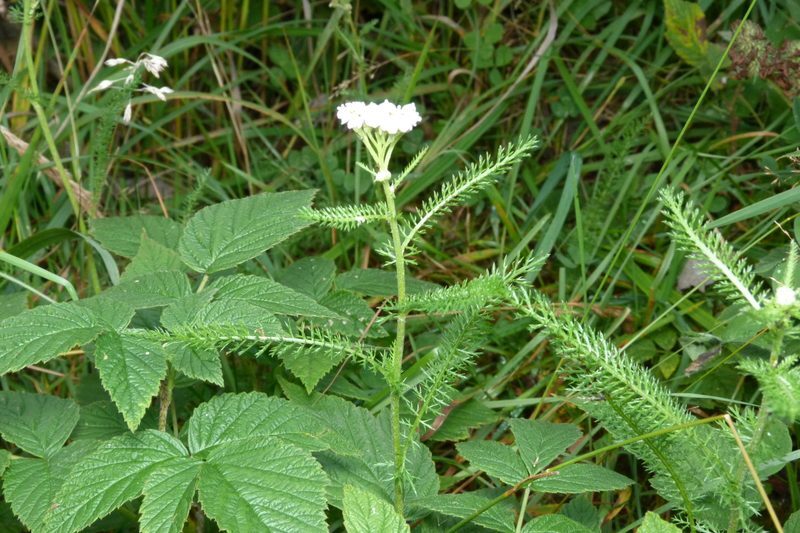
Photo: Donald Hobern from Copenhagen, Denmark · CC BY 2.0 · Source
Yarrow
Achillea millefolium
Family: Compositae | Parts Used: Leaves and flowers
Yarrow is a historically important herb known for its ability to regulate bleeding, reduce fever, and support circulation. Named after the warrior Achilles, it was traditionally applied on battlefields to address wounds. It offers both cooling and strengthening effects and has been used across Western and Native American traditions for cold and flu, hypertension, excessive menstrual bleeding, and fever management. The compound achilleine is responsible for much of its hemostatic activity.
Traditional Uses
- Cold and flu symptom support
- Fever reduction
- Hypertension management
- Excessive menstrual bleeding regulation
- Excessive external bleeding control and wound care
- Digestive support
Properties
Key Constituents
Preparations & Dosage
Bonnie's Notes
I find yarrow particularly effective for excessive bleeding during menstruation. It's one of the herbs I reach for first when that's the presenting concern.
Cautions
- Avoid during pregnancy.
- Monitor for allergic reactions; discontinue use if symptoms occur. Yarrow belongs to the Asteraceae family and may cross-react with related plant allergies.
- Avoid with blood-thinning medications; yarrow has hemostatic properties that may interact.
Habitat & Growing Conditions
Native to North America, Europe, and Asia. Found in prairies and meadows. Grows in USDA zones 4-8 with dry, well-draining soil in full sun.
Related Articles
Sources & Research
The Way of Herbs, Michael Tierra, p211
Medicinal Herbs: A Beginner's Guide, Rosemary Gladstar, p212
Published Research:
Achillea millefolium: Mechanism of action, pharmacokinetic, clinical drug-drug interactions and tolerability | Heliyon (2023)
Pharmacognosy, Phytochemistry and Pharmacological Properties of Achillea millefolium L.: A Review | Phytotherapy Research (2017)
Safety Assessment of Achillea millefolium as Used in Cosmetics | International Journal of Toxicology (2016)
Minireview on Achillea millefolium Linn | The Journal of Membrane Biology (2013)
These statements have not been evaluated by the Food and Drug Administration. This information is not intended to diagnose, treat, cure, or prevent any disease. If you are under the care of a health care provider or taking prescription medication, check with your provider before using any herbal supplement.