

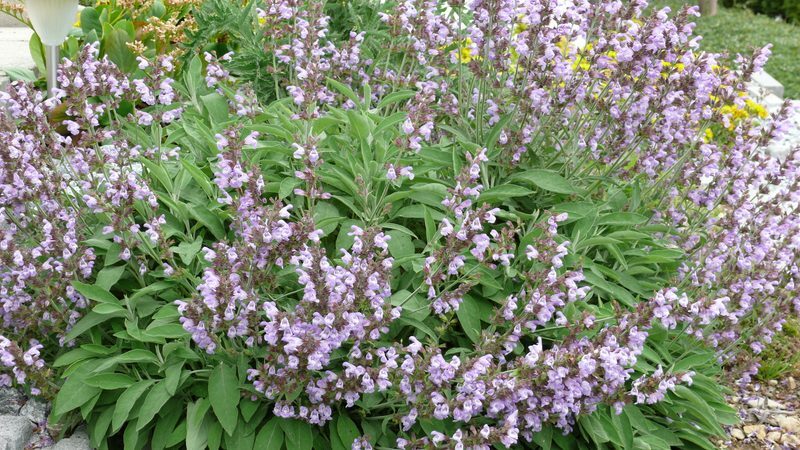
Photo: Walter Pöder, [1] · Public domain · Source
Sage
Salvia officinalis
Family: Lamiaceae | Parts Used: Leaves
Sage is a time-honored herb valued for its strong cleansing properties, both physical and spiritual. Rich in volatile oils (camphor, thujone, cineole) and tannins, it provides potent astringent and antimicrobial actions, making it effective for sore throats and menopausal symptoms. Widely used across Native American, Middle Eastern, and European traditions in smudging for cleansing and protecting spaces.
Traditional Uses
- Sore throat relief: infusion used as a gargle or throat spray
- Menopausal symptom management, including hot flashes
- Spiritual cleansing (smudging): dried herb burned to cleanse and protect spaces
- Uncrossing negative influences: used in incense blends or mojo bags
Properties
Key Constituents
Preparations & Dosage
- Infusion: 1-2 tsp herb per cup boiling water, or 1 oz dried herb per pint of water. Up to 3 cups daily.
- Tincture: 15-30 drops, up to 3 times daily.
- Throat spray: Infusion poured into a spray bottle for direct application to the throat.
- Smudging: Dried herb burned for cleansing and space protection.
- Essential oil: Effective for cleansing in spray form when diluted.
Spiritual & Folk Uses
- Traditionally used in cleansing: burn dried sage (smudging) to cleanse and protect areas from negative energy.
- Uncrossing: used in incense blends or mojo bags to strengthen reversing and removing negative work.
Bonnie's Notes
Excellent for cleansing whether burned or used in essential oil form in a spray.
Cautions
- May affect milk production in nursing mothers. Avoid during breastfeeding unless specifically using sage to dry up milk supply.
- Sage contains thujone; avoid excessive doses or long-term high-dose use.
- May worsen seizure disorders in susceptible individuals.
Habitat & Growing Conditions
Native to the Mediterranean and southern California. Hardy in US zones 4-10. Prefers full sun and well-draining soil.
Related Articles
Sources & Research
Medicinal Herbs: A Beginner's Guide, Rosemary Gladstar, p86
Published Research:
The Effect of Salvia Officinalis on Hot Flashes in Postmenopausal Women: A Systematic Review and Meta-Analysis | International Journal of Community Based Nursing and Midwifery (2023)
The effect of Salvia officinalis on blood glycemic indexes and blood lipid profile in diabetic patients: a systematic review | Journal of Complementary and Integrative Medicine (2023)
Bioactive Profile of Various Salvia officinalis L. Preparations | Plants (Basel, Switzerland) (2019)
Mentha pulegium L. and Salvia officinalis L. Bioactive Compounds: Focus on Their Application in Agriculture and Food | Chemistry and Biodiversity (2025)
These statements have not been evaluated by the Food and Drug Administration. This information is not intended to diagnose, treat, cure, or prevent any disease. If you are under the care of a health care provider or taking prescription medication, check with your provider before using any herbal supplement.