

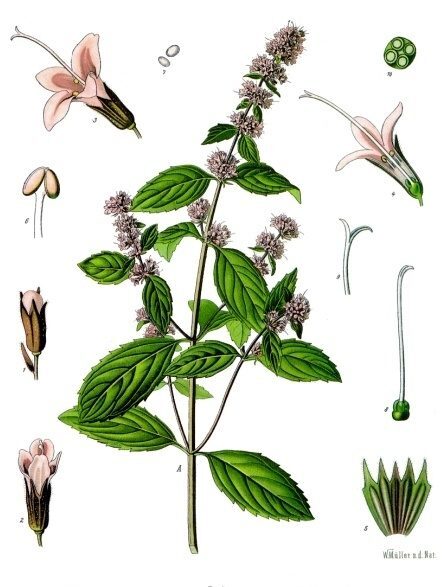
Photo: Franz Eugen Köhler, Köhler's Medizinal-Pflanzen · Public domain · Source
Peppermint
Mentha piperita
Family: Labiatae | Parts Used: Blossoms and leaves
Peppermint is known for its crisp aroma and cooling properties, traditionally used to ease nausea, relieve gas, soothe stomach cramps, and clear headaches. The volatile oils menthol and menthone give it both its distinctive flavor and its digestive action. It also supports mental clarity, making it one of the most versatile herbs in Western and Middle Eastern traditions.
Traditional Uses
- Digestive aid: eases nausea, gas, and stomach cramping
- Headache relief, including tension headaches
- Mental clarity and energy support
- Supports digestive comfort after meals
Key Constituents
- Menthol (volatile oil)
- Menthone (volatile oil)
- Flavonoids
- Phenolic acids
- Triterpenes
- Calcium, magnesium, potassium
Preparations & Dosage
- Tincture: 10-30 drops, 2-3 times daily.
- Infusion: 1 tsp dried herb in 1 cup water. Up to 3 cups daily.
- Essential Oil: Steam inhalation for headaches and mental clarity.
TCM Profile: Spicy, bitter, cool.
Spiritual & Folk Uses
In folk traditions, peppermint is traditionally used for uncrossing: powdered and added to incense blends to clear stagnant or blocked conditions. It is also used for prosperity work, added to mojo bags or incense blends to draw abundance.
Bonnie's Notes
I use it to improve the taste of medicinal teas. Beware: it will take over the garden.
Cautions
- May worsen symptoms of GERD (gastroesophageal reflux) by relaxing the lower esophageal sphincter. Avoid if prone to acid reflux.
- Not recommended for infants or young children. Menthol content may cause breathing difficulties.
- May interact with medications metabolized by cytochrome P450 enzymes.
- Peppermint oil in large doses may cause heartburn, nausea, and abdominal pain.
- Topical essential oil use may cause skin irritation in sensitive individuals.
Habitat & Growing Conditions
Native to Europe and the Middle East, now grown worldwide. Grows in USDA zones 3-11. Prefers rich, moist, well-drained soil in full sun to partial shade. Spreads readily by runners and will colonize a garden bed quickly if not contained.
Related Articles
Sources & Research
Medicinal Herbs: A Beginner's Guide, Rosemary Gladstar, p. 185
The Way of Herbs, Michael Tierra, p. 195
Published Research:
A review of the bioactivity and potential health benefits of peppermint tea (Mentha piperita L.) | Phytotherapy research (2006)
Ethnomedicinal, phytochemical and pharmacological updates on Peppermint (Mentha x piperita L.): a review | Phytotherapy research (2020)
Mentha piperita: Essential Oil and Extracts, Their Biological Activities, and Perspectives on the Development of New Medicinal Preparations | Molecules (2023)
Peppermint (Mentha piperita): an evidence-based systematic review by the Natural Standard Research Collaboration | Journal of herbal pharmacotherapy (2007)
These statements have not been evaluated by the Food and Drug Administration. This information is not intended to diagnose, treat, cure, or prevent any disease. If you are under the care of a health care provider or taking prescription medication, check with your provider before using any herbal supplement.