

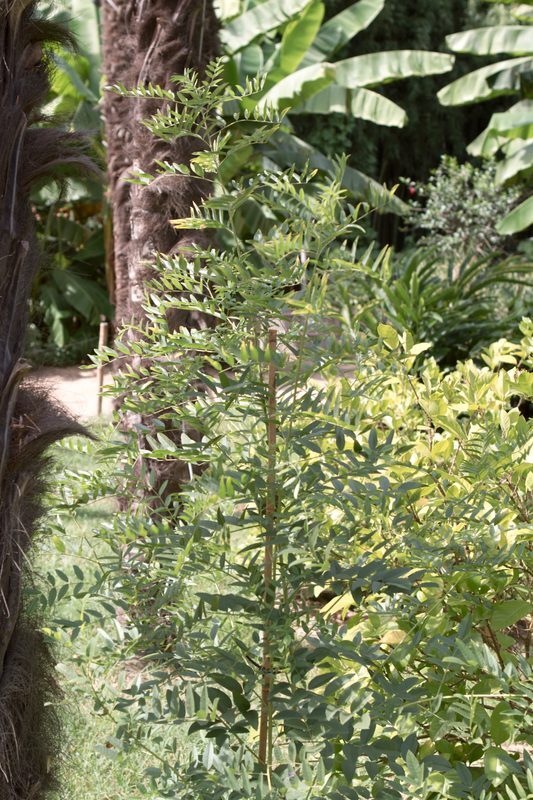
Photo: Georges Seguin (Okki) · CC BY-SA 3.0 · Source
Licorice
Glycyrrhiza glabra
Family: Leguminoseae | Parts Used: Root
Licorice root is a soothing, restorative herb used for centuries across TCM, Ayurvedic, Western, and Middle Eastern traditions. Its demulcent properties coat irritated mucous membranes throughout the respiratory and digestive tracts, making it a go-to for coughs, bronchitis, ulcers, and gastritis. Its active compound glycyrrhizic acid also supports adrenal function as part of the body's stress response. The root contributes sweetness and balance to tonic blends and teas.
Traditional Uses
- Adrenal gland support and adaptogenic stress response
- Bronchitis and cough relief
- Ulcer and gastritis support
- Demulcent action on irritated mucous membranes in the respiratory and digestive tracts
- Laxative effects for digestive sluggishness
Properties
Key Constituents
Preparations & Dosage
- Decoction: 1-2 tsp dried root in 1 cup boiling water, or 1 oz dried root per pint of water; up to 3 cups daily.
- Tincture: 15-30 drops up to 3 times daily.
- Tonic blends: Root commonly added to tea and tonic formulas for sweetness and synergistic support.
TCM Profile: Neutral, pleasant taste.
Bonnie's Notes
Licorice is a key ingredient in many of my tonic and tea blends. It adds sweetness, rounds out bitter herbs, and brings genuine support for the adrenals. I reach for it when someone is depleted and needs something that will sustain them over time, not just address a single symptom.
Cautions
- People with a history of high blood pressure, water retention, heart palpitations, or other cardiovascular or kidney disorders should use licorice only under the supervision of a healthcare practitioner.
- Avoid during pregnancy.
- May interact with blood pressure medication, diuretics, and other heart-related drugs.
Habitat & Growing Conditions
Grows across the Americas, Europe, Asia, and Australia in hot, sunny climates (zones 9-11). Prefers sandy soil with abundant water and sunshine.
Related Articles
Sources & Research
The Way of Herbs, Michael Tierra, p. 230
The New Holistic Herbal, David Hoffmann, p. 211
Medicinal Herbs: A Beginner's Guide, Rosemary Gladstar, p. 161
Published Research:
Liquorice (Glycyrrhiza glabra): A phytochemical and pharmacological review | Phytotherapy Research (2018)
Toxicological Effects of Glycyrrhiza glabra (Licorice): A Review | Phytotherapy Research (2017)
Glycyrrhiza glabra (Licorice): A Comprehensive Review on Its Phytochemistry, Biological Activities, Clinical Evidence | Plants (Basel, Switzerland) (2021)
Traditional Uses, Bioactive Chemical Constituents, and Pharmacological and Toxicological Activities of Glycyrrhiza glabra | Biomolecules (2020)
These statements have not been evaluated by the Food and Drug Administration. This information is not intended to diagnose, treat, cure, or prevent any disease. If you are under the care of a health care provider or taking prescription medication, check with your provider before using any herbal supplement.