

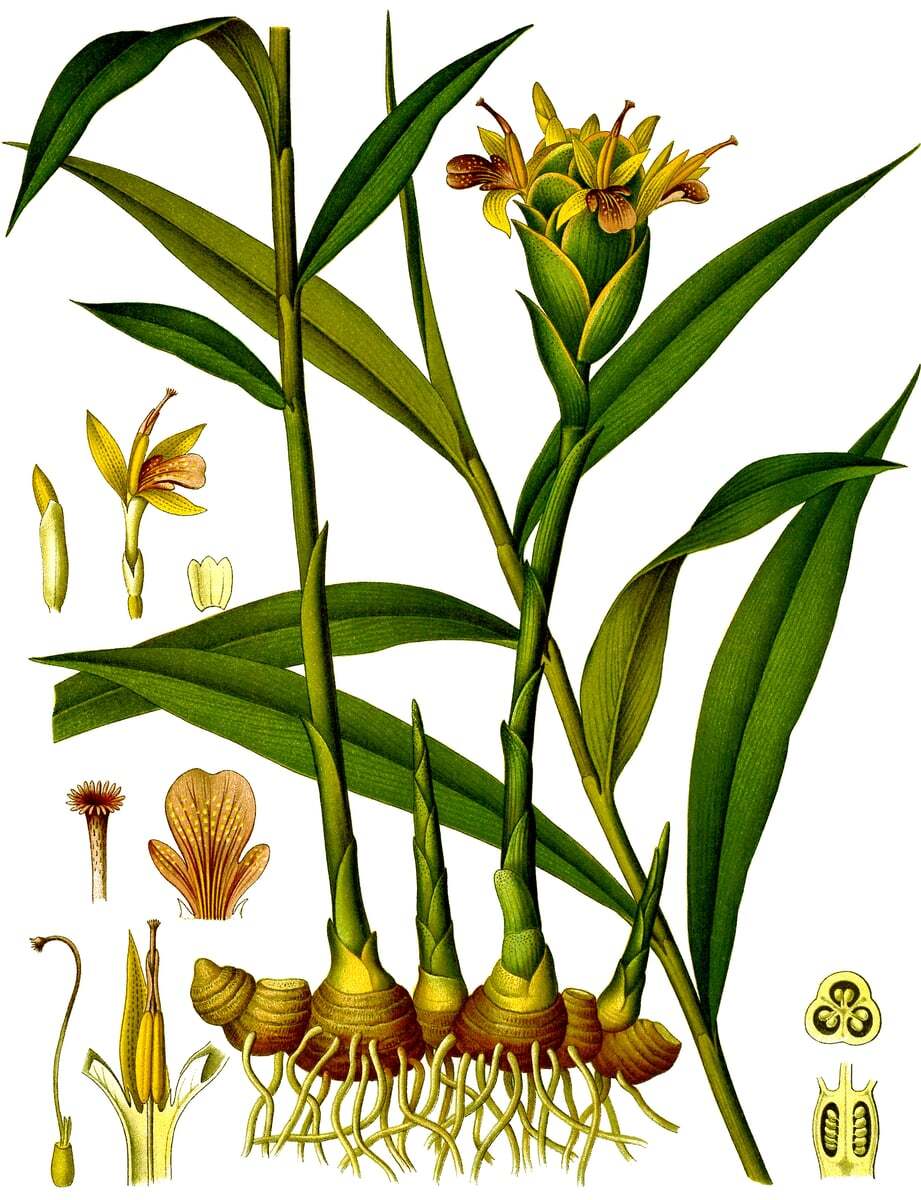
Photo: Franz Eugen Köhler, Köhler's Medizinal-Pflanzen · Public domain · Source
Ginger
Zingiber officinale
Family: Zingiberaceae | Parts Used: Rhizome
Ginger is a warming and invigorating root native to Southeast Asia, traditionally used across Ayurvedic, TCM, Western, and Middle Eastern traditions to support circulation, soothe digestive upset, relieve nausea, and address sore throats and joint inflammation. Available fresh or dried; dried ginger is significantly more concentrated and warming than fresh.
Traditional Uses
- Improves circulation
- Alleviates nausea (including motion sickness and morning sickness)
- Soothes sore throat (gargle preparation)
- Reduces joint inflammation; supports musculoskeletal health
- Supports digestive function, including indigestion and gas
- Helps with colds and flu symptoms
- Promotes sweating to break fevers (diaphoretic action)
Properties
- Stimulant
- Carminative
- Rubefacient
- Diaphoretic
- Anti-inflammatory
Key Constituents
- Essential oils
- Oleoresin
- Gingerol (primary pungent compound in fresh ginger)
- Shogaol (forms from gingerol when dried; more potent)
Preparations & Dosage
- Infusion: 1-2 teaspoons herb in 1 cup boiling water.
- Decoction: 1 ounce dried herb per pint of water.
- Tincture: 15-30 drops.
- Gargle: Infusion or decoction used as a gargle for sore throat relief.
- Culinary: Fresh or dried rhizome added to food, teas, and cooking.
Note: Dried ginger is significantly stronger than fresh. Fresh has a milder flavor and is preferred for everyday use; dried is the stronger therapeutic form.
Spiritual & Folk Uses
In some folk traditions, ginger is used in prosperity and success work. Its association with heat and activation makes it a traditional ingredient in preparations aimed at adding speed or intensity to an outcome. It is used in some spiritual bath formulas for clearing stagnation and drawing forward movement.
Bonnie's Notes
Dried herb is much stronger than fresh. Fresh has a milder taste and is preferred for daily use over dried. When I want therapeutic strength, especially for circulation or cold onset, I reach for the dried root.
Cautions
- Generally safe in culinary amounts.
- High doses may cause heartburn, diarrhea, and mouth irritation.
- May increase bleeding risk; discontinue before surgery and use with caution alongside blood-thinning medications.
- May lower blood sugar; monitor closely if taking diabetes medications.
- May interact with blood pressure and heart medications.
- Consult a healthcare provider before medicinal use during pregnancy, particularly for morning sickness.
Habitat & Growing Conditions
Native to Southeast Asia. Grows in tropical climates, USDA zones 8 and above. Prefers hot, humid conditions with rich, fertile soil in full sun to partial shade.
Related Articles
Sources & Research
Medicinal Herbs: A Beginner's Guide, Rosemary Gladstar, p. 78
The New Holistic Herbal, David Hoffmann, p. 203
Published Research:
A critical review of Ginger's (Zingiber officinale) antioxidant, anti-inflammatory, and immunomodulatory activities | Frontiers in Nutrition (2024)
Bioactive Compounds and Bioactivities of Ginger (Zingiber officinale Roscoe) | Foods (Basel, Switzerland) (2019)
Zingiber officinale var. rubrum: Red Ginger's Medicinal Uses | Molecules (Basel, Switzerland) (2022)
Some phytochemical, pharmacological and toxicological properties of ginger (Zingiber officinale Roscoe): a review | Food and Chemical Toxicology (2008)
These statements have not been evaluated by the Food and Drug Administration. This information is not intended to diagnose, treat, cure, or prevent any disease. If you are under the care of a health care provider or taking prescription medication, check with your provider before using any herbal supplement.