

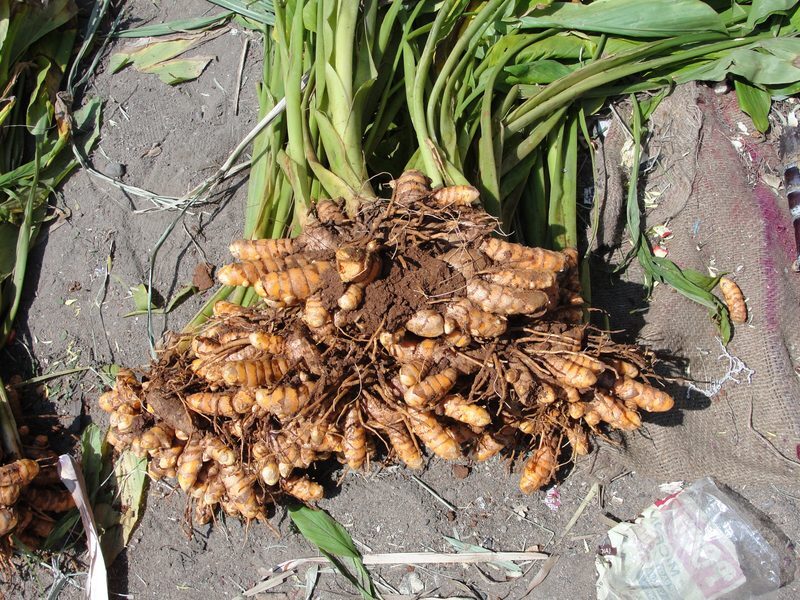
Photo: Thamizhpparithi Maari · CC BY-SA 3.0 · Source
Turmeric
Curcuma longa
Family: Zingiberaceae | Parts Used: Rhizome
Turmeric is a golden rhizome known for its vibrant color and one of the most studied anti-inflammatory compounds in herbal medicine: curcumin. Traditionally used to ease menstrual cramps, support digestion, enhance circulation, and reduce inflammation, it acts as a blood purifier and natural analgesic. Warming and stimulating, it is also classified as an emmenagogue in Ayurvedic and TCM traditions.
Traditional Uses
- Traditionally used to ease menstrual cramps and support reproductive health
- Supports digestion and addresses indigestion
- Reduces inflammation throughout the body
- Enhances blood circulation and acts as a blood purifier
- Natural pain relief (analgesic) for discomfort and inflammation
- Antiseptic properties for wound support
Key Constituents
Preparations & Dosage
- Infusion or Decoction: 1-2 tsp powdered root in 1 cup boiling water, or 1 oz dried root per pint of water.
- Culinary: Powdered root added to foods, teas, and golden milk preparations.
TCM Profile: Spicy, warming.
Bonnie's Notes
The powdered root has a strong orange color that can stain. I put powdered turmeric in my tea and it stained my temporary crowns. It does not stain regular teeth the same way, but be aware when using it around dental work.
Cautions
- Powdered form can stain teeth and dental work due to its intense orange pigment.
- Avoid with blood-thinning medications.
- Avoid with diabetes medications; may affect blood sugar levels.
- Use caution with gallbladder issues; its cholagogue action increases bile flow.
- Avoid before surgery.
Habitat & Growing Conditions
Native to southeast Asia. Grows in tropical climates, USDA zones 8 and above. Prefers hot, humid conditions with rich, fertile soil in full sun to partial shade. Avoid waterlogging.
Related Articles
Sources & Research
The Way of Herbs, Michael Tierra, p200
Published Research:
Efficacy and Safety of Curcumin and Curcuma longa Extract in the Support for Arthritis: A Systematic Review and Meta-Analysis | Frontiers in Immunology (2022)
Effects of Turmeric (Curcuma longa) on Skin Health: A Systematic Review of the Clinical Evidence | Phytotherapy Research (2016)
The efficacy and safety of Curcuma longa extract and curcumin supplements on osteoarthritis: a systematic review and meta-analysis | Bioscience Reports (2021)
Curcumin and Curcuma longa Extract in the Support for 10 Types of Autoimmune Diseases: A Systematic Review and Meta-Analysis | Frontiers in Immunology (2022)
These statements have not been evaluated by the Food and Drug Administration. This information is not intended to diagnose, treat, cure, or prevent any disease. If you are under the care of a health care provider or taking prescription medication, check with your provider before using any herbal supplement.