

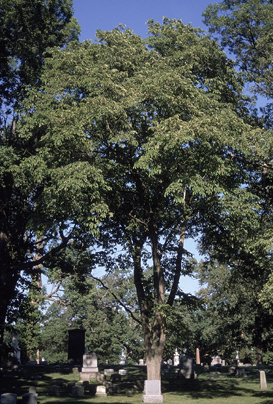
Photo: ? · Attribution · Source
Slippery Elm
Ulmus rubra
Family: Ulmaceae | Parts Used: Inner bark
Slippery Elm is a soothing, mucilaginous inner bark with a long history of use in Native American herbalism. Its coating action protects and calms irritated tissues throughout the respiratory and digestive systems, making it a go-to for sore throats, coughs, gastrointestinal ulcers, and diarrhea. Mixed into a paste, it promotes healing for wounds, sores, and minor burns. Sweet and neutral in flavor, it is classified as a yin tonic.
Traditional Uses
- Sore throat and cough relief
- Respiratory tract irritation soothing
- Gastrointestinal ulcer support
- Diarrhea relief
- Digestive tract inflammation relief
- Wound and sore healing (external application)
- Minor burn support (external application)
Key Constituents
- Proteins
- Mucins
- Amino acids
- Iodine
- Bromine
- Manganese salts
Preparations & Dosage
- Decoction: Add 1-2 teaspoons dried bark to 1 cup water, simmer 10-15 minutes. Take half a cup three times daily. Decoctions can also be converted into cough syrup.
- Topical poultice: Mix dried bark with minimal boiling water to form a paste for external application on wounds, sores, and minor burns.
TCM Profile: Sweet, neutral.
Spiritual & Folk Uses
Traditionally used in folk practice to stop gossip and slander. See spiritual uses for more context on how slippery elm appears in folk herbalism.
Cautions
- Generally considered safe. May slow absorption of other medications due to its mucilaginous nature. Take medications at least 1 hour apart from slippery elm preparations.
- Not recommended during pregnancy, as the bark may have abortifacient effects.
- Source sustainably. Inner bark harvesting can damage or kill the tree, and the species is threatened in some areas.
Habitat & Growing Conditions
Native to North America. Found growing on wooded slopes and bluffs in US zones 3-9.
Related Articles
Sources & Research
The Way of Herbs, Michael Tierra, p. 194
The New Holistic Herbal, David Hoffmann, p. 233
Published Research:
Slippery Elm | PubMed (2012)
These statements have not been evaluated by the Food and Drug Administration. This information is not intended to diagnose, treat, cure, or prevent any disease. If you are under the care of a health care provider or taking prescription medication, check with your provider before using any herbal supplement.