

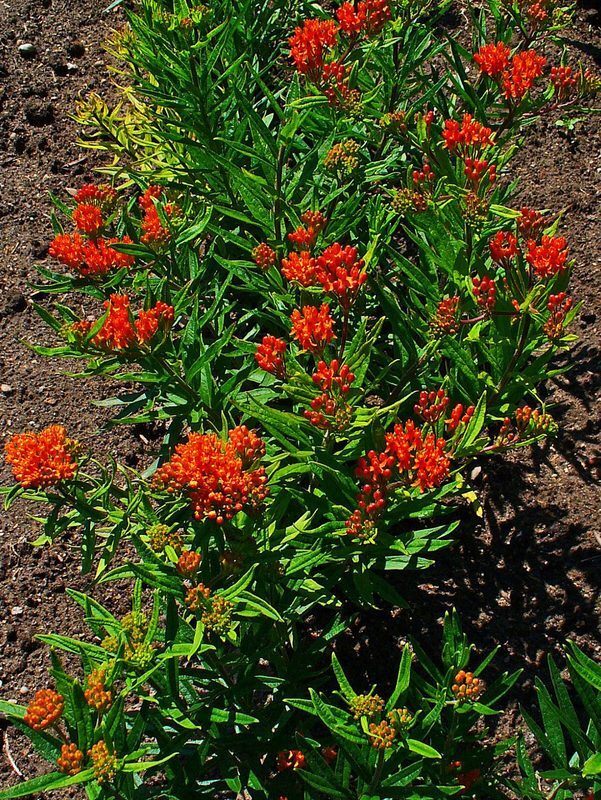
Photo: H. Zell · CC BY-SA 3.0 · Source
Pleurisy Root
Asclepias tuberosa
Family: Asclepiadaceae | Parts Used: Root
Pleurisy Root is a native North American plant with vibrant orange blooms, used in Native American herbalism for respiratory inflammation and lung congestion. Its diaphoretic and expectorant properties work to open the chest, ease breathing, and support detoxification through perspiration. It is potent and should be reserved for short-term, symptomatic relief of respiratory conditions such as pleurisy, bronchial congestion, colds, and flu.
Traditional Uses
- Pleurisy (inflammation of the lining around the lungs)
- Bronchial and lung congestion
- Respiratory inflammation
- Colds and flu symptom relief
- Cardiac tonic support
Properties
Key Constituents
- Glycosides
- Essential oil
- Cardenolides
Preparations & Dosage
- Decoction: 1-2 tsp root in 1 cup boiling water, or 1 oz dried root per 1 pint water. Take 1-2 cups daily while symptoms persist.
- Tincture: 15-30 drops once or twice daily while symptoms persist.
TCM Profile: Bitter, acrid, cool.
Bonnie's Notes
Excellent tea for pleurisy and respiratory blends.
Cautions
- Avoid very large doses. Not recommended for long-term use.
- Reserved for short-term, symptomatic relief only. Discontinue once symptoms resolve.
Habitat & Growing Conditions
Native to North America, growing in USDA zones 3-9. Found in open fields, roadsides, and dry prairies. Prefers well-draining soils and full sun. Its vibrant orange flower clusters make it easy to identify and a favorite of pollinators, especially monarch butterflies.
Related Articles
Sources & Research
The Way of Herbs, Michael Tierra, p. 180
The New Holistic Herbal, David Hoffmann, p. 224
Herbs: An Illustrated Encyclopedia, Kathi Keville, p. 50
Published Research:
8,12;8,20-diepoxy-8,14-secopregnane glycosides from roots of Asclepias tuberosa and their effect on proliferation of human cancer cell lines | Phytochemistry (2011)
Phyto-constituents of Asclepias tuberosa L. (Asclepiadaceae) | Bollettino chimico farmaceutico (1975)
On the cardenolides of roots of Asclepias tuberosa L. | Archiv der Pharmazie (1966)
These statements have not been evaluated by the Food and Drug Administration. This information is not intended to diagnose, treat, cure, or prevent any disease. If you are under the care of a health care provider or taking prescription medication, check with your provider before using any herbal supplement.