

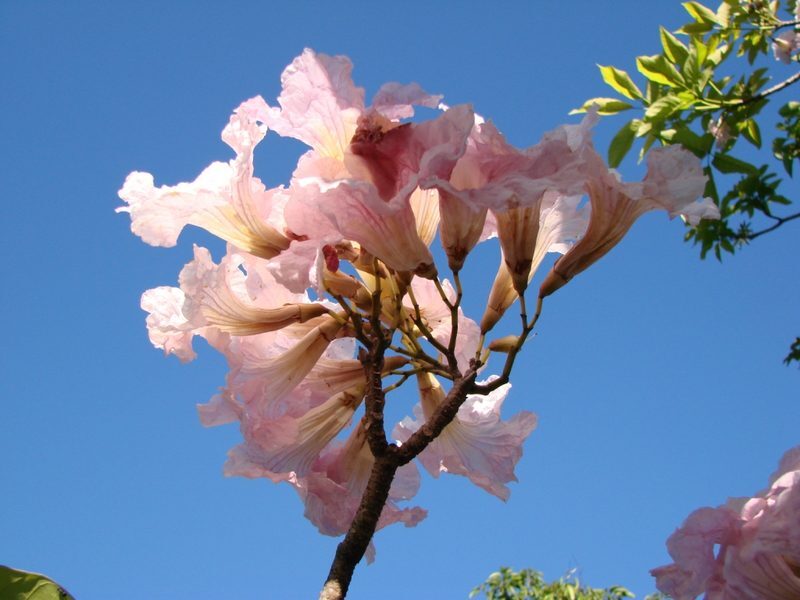
Photo: João Medeiros · CC BY 2.0 · Source
Pau d'Arco
Tabebuia heptaphylla
Family: Bignoniaceae | Parts Used: Inner bark
Pau d'Arco is a large rainforest tree native to South America. Its inner bark has been used by South American tribes for over 1,000 years to support immunity, purify the blood, and address infection and inflammation. The primary active compounds are quinones, principally lapachol, which show antifungal, antibacterial, and anti-inflammatory activity in research. Traditionally used during acute illness and for deeper systemic cleansing, it has a cool, bitter nature that addresses inflammatory conditions.
Traditional Uses
- Supports the immune system during acute illness
- Blood cleansing and purification
- Deeper systemic cleansing
- Blood pressure support (hypotensive action)
- Traditionally used for antibacterial and antifungal conditions
- Traditionally used for fever, infection, and inflammatory conditions
Properties
Preparations & Dosage
- Decoction: 1-2 tsp sifted inner bark in 1 cup boiling water, or 1 oz dried inner bark per 1 pint of water. Take 3-4 times daily for acute conditions.
- Tincture: 15-30 drops, 3-4 times daily for acute conditions.
TCM Profile: Cool energy, bitter flavor.
Cautions
- Excessive use can cause nausea and vomiting.
- May interact with blood-thinning medications. Avoid if taking blood thinners.
- Not recommended during pregnancy.
- High doses may be toxic. Not for long-term use without professional guidance.
- Should not be used as a replacement for conventional cancer treatment.
- May interact with medications metabolized by cytochrome P450 enzymes.
- Limited human clinical data available.
Habitat & Growing Conditions
Native to South America, particularly Paraguay, Brazil, and Argentina. Now cultivated worldwide in warmer regions, USDA zones 10-12. Prefers moist, rich soil in tropical environments. A large canopy tree whose inner bark is harvested sustainably for medicinal use.
Related Articles
Sources & Research
The Way of Herbs, Michael Tierra, p. 176
Today's Herbal Health, Louise Tenney, p. 97
Published Research:
Naphthoquinone derivatives and lignans from the Paraguayan crude drug "tayï pytá" (Tabebuia heptaphylla, Bignoniaceae) | Zeitschrift fur Naturforschung (2003)
Pau d'arco activates Nrf2-dependent gene expression via the MEK/ERK-pathway | The Journal of toxicological sciences (2014)
Safety and tolerability of Pau d'Arco (Tabebuia avellanedae) for primary dysmenorrhea: A single-arm, open-label trial | Advances in integrative medicine (2022)
Developing seed cryobank strategies for Tabebuia heptaphylla (Bignoniaceae), a hardwood tree of the Brazilian South Atlantic rainforest | Cryo letters (2011)
These statements have not been evaluated by the Food and Drug Administration. This information is not intended to diagnose, treat, cure, or prevent any disease. If you are under the care of a health care provider or taking prescription medication, check with your provider before using any herbal supplement.