

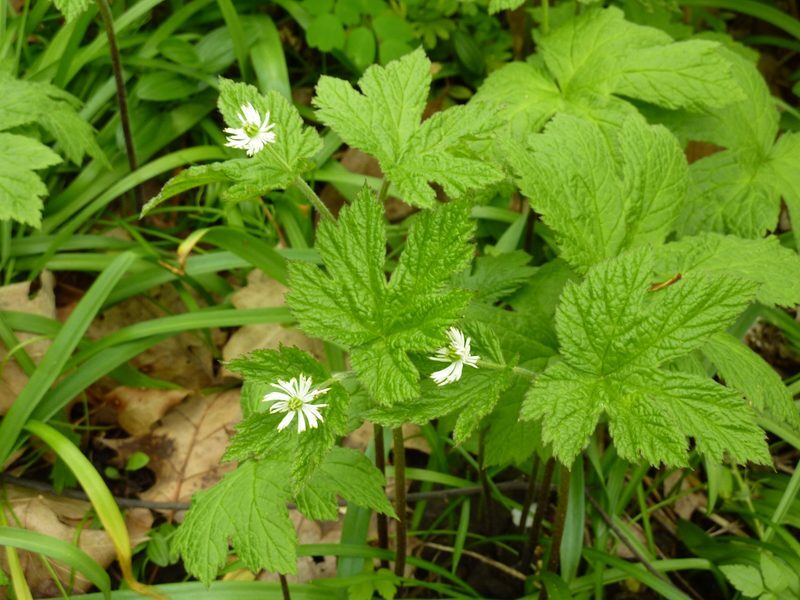
Photo: James Steakley · CC BY-SA 3.0 · Source
Goldenseal
Hydrastis canadensis
Family: Ranunculaceae | Parts Used: Root
Goldenseal is a potent bitter herb native to North America, long used in Native American herbalism for conditions affecting mucous membranes. Its primary alkaloids, berberine and hydrastine, drive its antimicrobial and anti-inflammatory actions. It supports immune function during acute infections, assists liver and gallbladder function, and is applied externally for skin irritations and wound healing. Because of its strength, it is reserved for short-term use only.
Traditional Uses
- Traditionally used for skin conditions, including eczema
- Supports immune function during colds and respiratory infections
- Addresses acute mucous membrane conditions in the respiratory and digestive tracts
- Supports liver and gallbladder function
- Promotes wound healing and skin irritation relief when applied externally
- Works effectively alongside other immune herbs such as Echinacea
- Traditionally used in Native American herbalism as a wash and internal bitter tonic
Key Constituents
Preparations & Dosage
- Infusion: 1-2 teaspoons root in 1 cup boiling water, or 1 oz dried herb per pint of water. Take up to 3 times daily.
- Tincture: 15-30 drops up to 3 times daily.
- External: Powdered root infused in oil, prepared as a salve, or used as a wash for skin conditions and wound care.
TCM Profile: Bitter, cold.
Important: Use short-term only, 3-4 weeks maximum. Not for chronic daily supplementation.
Cautions
- Not for use longer than 3-4 weeks. Discontinue if mucous membranes become irritated.
- Avoid during pregnancy.
- Contraindicated with CYP450-metabolized drugs and statins. Check interactions with your pharmacist.
- Use caution with high blood pressure. Consult your provider before use if taking prescription medications.
- Not recommended before surgery.
Habitat & Growing Conditions
Native to North America, growing in US zones 5-8. Prefers moist, shaded, wooded areas with rich soil. Wild goldenseal populations have been significantly reduced due to overharvesting. Cultivated sources are strongly preferred. At-risk status means responsible sourcing matters.
Related Articles
Sources & Research
The Way of Herbs, Michael Tierra, p. 141
Medicinal Herbs: A Beginner's Guide, Rosemary Gladstar, p. 139
Published Research:
Goldenseal (Hydrastis canadensis L.) and its active constituents: A critical review of their efficacy and toxicological safety | Pharmacological Research (2020)
Nanocarrier optimization: Encapsulating Hydrastis canadensis in chitosan nanoparticles for enhanced immune support | International Journal of Biological Macromolecules (2024)
Effects of Hydrastis Canadensis, Commiphora Habessinica, Phytolacca Americana, and Echinacea Purpurea on Bacterial Growth | Alternative Therapies in Health and Medicine (2021)
In Vitro Assessment of Homeopathic Potencies of Hydrastis canadensis on Hormone-Dependent and Independent Breast Cancer | Homeopathy: the journal of the Faculty of Homeopathy (2020)
These statements have not been evaluated by the Food and Drug Administration. This information is not intended to diagnose, treat, cure, or prevent any disease. If you are under the care of a health care provider or taking prescription medication, check with your provider before using any herbal supplement.