

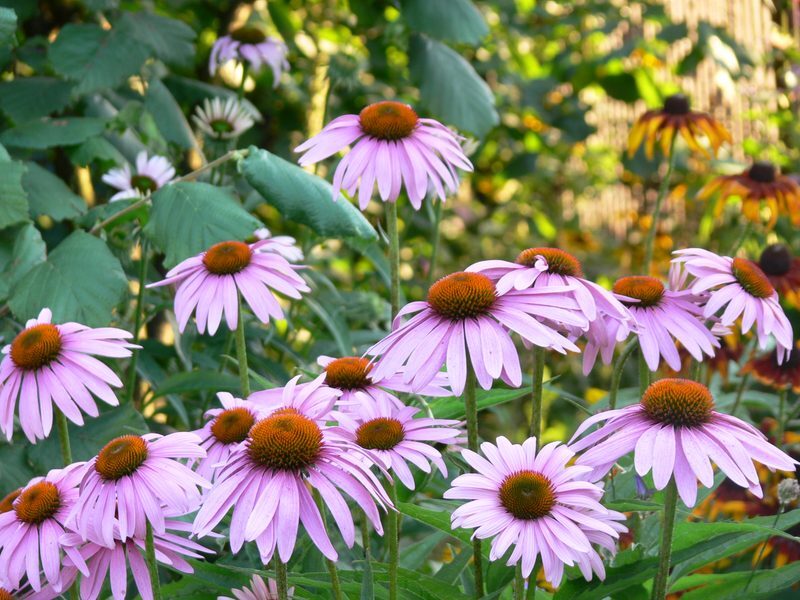
Photo: Dy-e · CC BY-SA 3.0 · Source
Echinacea
Echinacea angustifolia / Echinacea purpurea
Family: Compositae | Parts Used: Root, leaves, flower, seed
Echinacea is a vibrant immune-supporting herb long used in Native American traditions across North America. It works by stimulating the body's natural defenses and is most effective when taken at the first signs of illness to reduce duration and severity of colds, flus, and infections. It also provides anti-inflammatory, antibacterial, and antifungal support, and has a documented history of use in wound healing. All parts of the plant, root, leaves, flower, and seed, carry medicinal value.
Traditional Uses
- Colds and flus, traditionally used to reduce duration and severity
- Upper respiratory infections
- Inflammatory conditions
- Wound healing and topical skin applications
- Promotes overall immune resilience
Properties
TCM Profile: Bitter, pungent, cool.
Key Constituents
- Polysaccharides
- Caffeic acid
- Echinacoside
- Sesquiterpenes
- Tannins
- Linoleic acid
- Beta-carotene
- Vitamin C
Preparations & Dosage
- Infusion: 1/4 cup every half hour at illness onset, up to 4 cups daily.
- Tincture: 1/4-1/2 tsp hourly, maximum 6 tsp daily.
Best used consistently at the first sign of symptoms rather than as a long-term daily supplement.
Cautions
- Watch for signs of allergy, particularly in those sensitive to plants in the Asteraceae (daisy) family.
- Not recommended during pregnancy or breastfeeding.
- Use with caution in autoimmune conditions.
- Consult a healthcare provider before use if taking prescription medications.
Habitat & Growing Conditions
Native to North America. Grows in all US regions. Prefers well-drained prairie soil. Thrives in full sun in cooler climates and tolerates partial shade in warmer regions. Both E. angustifolia and E. purpurea are widely cultivated; purpurea is easier to grow and more commonly available.
Related Articles
Sources & Research
Medicinal Herbs: A Beginner's Guide, Rosemary Gladstar, p. 129
The Way of Herbs, Michael Tierra
Published Research:
Echinacea species (Echinacea angustifolia, Echinacea pallida, Echinacea purpurea): a review | The Journal of Pharmacy and Pharmacology (2005)
Phytochemical Composition and Wound Healing Properties of Echinacea angustifolia DC. Root Hydroalcoholic Extract | International Journal of Molecular Sciences (2025)
Echinacea angustifolia and Echinacea purpurea Supplementation Combined with Vaginal Hyaluronic Acid to Boost Remission | Medicina (Kaunas, Lithuania) (2022)
Endophytic and rhizospheric bacterial communities isolated from the medicinal plants Echinacea purpurea and Echinacea angustifolia | International Microbiology (2014)
These statements have not been evaluated by the Food and Drug Administration. This information is not intended to diagnose, treat, cure, or prevent any disease. If you are under the care of a health care provider or taking prescription medication, check with your provider before using any herbal supplement.