

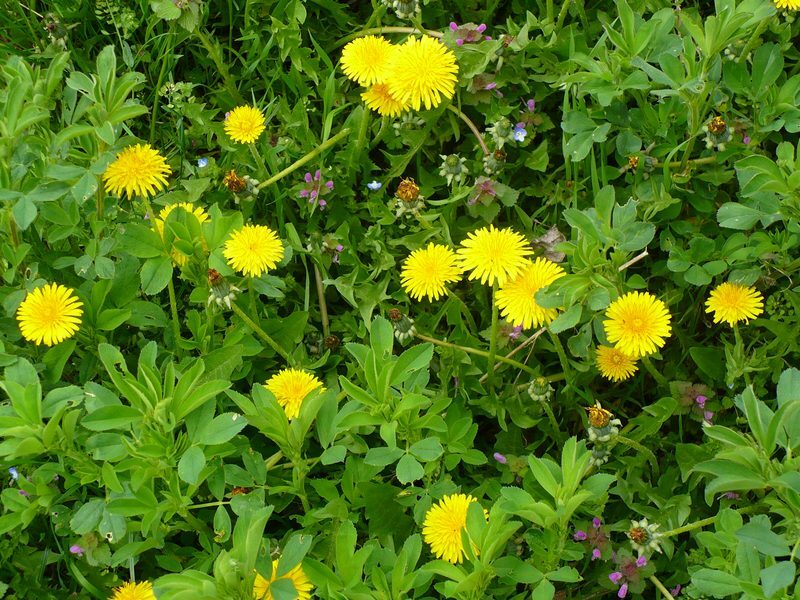
Photo: Vikiçizer · CC BY-SA 4.0 · Source
Dandelion
Taraxacum officinale
Family: Compositae | Parts Used: Whole plant
Dandelion is a powerful, nutrient-dense detoxifying herb traditionally used to stimulate liver function, purify blood, and support healthy digestion. The bitter compounds in the leaves and root enhance bile flow and nutrient assimilation, while the diuretic properties support kidney function and help manage water retention. Used across Western, TCM, Middle Eastern, and European herbalism, every part of this plant is medicinal.
Traditional Uses
- Stimulates the liver for toxin removal and blood purification
- Helps reduce blood pressure
- Bitter compounds assist digestion and promote bile flow
- Nutritive herb, rich in vitamins A, B, C, and D, plus iron, potassium, and calcium
- Diuretic support for kidney health and water retention
- Tonic for general vitality and mineral replenishment
Properties
- Alterative
- Cholagogue
- Diuretic
- Stomachic
- Aperient
- Tonic
Key Constituents
- Vitamins A, B, C, D
- Iron
- Potassium
- Calcium
- Inulin
- Sesquiterpenes
- Carotenoids
Preparations & Dosage
- Tincture: 10-30 drops taken up to 3 times daily.
- Infusion: Flower and leaf prepared as infusion. 2-3 cups daily.
- Decoction: Root prepared as a decoction. 2-3 cups daily.
- Coffee substitute: Roasted dandelion root can be used as a caffeine-free coffee alternative.
TCM Profile: Cool and bitter.
Fun Fact: Roasted dandelion root has been used as a coffee substitute for centuries. It has a rich, slightly bitter flavor and supports liver function while providing the ritual of a hot beverage without caffeine.
Bonnie's Notes
This is great for detoxing the body. It can be bitter, so I combine it with other herbs or add honey.
Cautions
- Some individuals may be allergic to the milky latex in the flowers and stems. If a rash develops, discontinue use.
Habitat & Growing Conditions
Native to Eurasia, now found worldwide. Prefers moist areas and full sun, but tolerates shade and poor soils. Considered a weed in most lawns, the entire plant is edible and medicinal. The leaves are best harvested before flowering, and the root in autumn.
Related Articles
Sources & Research
Medicinal Herbs: A Beginner's Guide, Rosemary Gladstar, p. 124
The Way of Herbs, Michael Tierra, p. 127
Published Research:
Taraxacum officinale and related species: An ethnopharmacological review and its potential as a commercial medicinal plant | Journal of Ethnopharmacology (2015)
Dandelion (Taraxacum officinale): A Promising Source of Nutritional and Bioactive Compounds | Recent Advances in Food, Nutrition & Agriculture (2025)
The Physiological Effects of Dandelion (Taraxacum Officinale) in Type 2 Diabetes | The Review of Diabetic Studies (2016)
The Role of Dandelion (Taraxacum officinale) in Liver Health and Hepatoprotective Properties | Pharmaceuticals (2025)
These statements have not been evaluated by the Food and Drug Administration. This information is not intended to diagnose, treat, cure, or prevent any disease. If you are under the care of a health care provider or taking prescription medication, check with your provider before using any herbal supplement.