

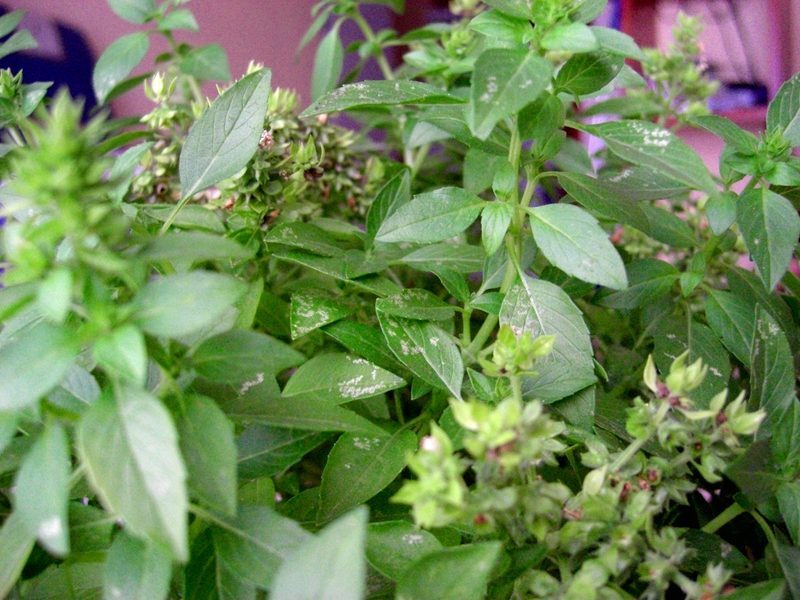
Photo: Jjvaca · CC BY-SA 3.0 · Source
Basil
Ocimum basilicum
Family: Lamiaceae | Parts Used: Leaf and flower
Basil is a tropical herb native to Asia, now cultivated widely in warm climates for both its culinary and spiritual applications. It carries significance in folk herbalism for its digestive properties and its traditional use in spiritual cleansing and protection. Its active constituents include essential oil, caffeic acid, monoterpenes, tannins, beta-carotene, and vitamin C, giving it antibacterial, antifungal, anti-inflammatory, and antiviral properties.
Traditional Uses
- May help ease stomach cramping
- Eases nausea
- Soothes insect bites and stings when applied topically
- Antibacterial and antifungal properties
- Supports a healthy inflammatory response
- Traditionally used for immune wellness activity against DNA and RNA viruses
- Antioxidant and neuroprotective properties supporting the nervous system
Properties
Key Constituents
Preparations & Dosage
Spiritual & Folk Uses
Basil is traditionally used for cleansing and protection. Common methods include spiritual baths, floor washes, incense blends, and mojo bags. It can also be sprinkled on carpets or floors and vacuumed up for room cleansing.
Bonnie's Notes
Basil is a staple in my spiritual herb collection. I use it regularly for cleansing.
Cautions
- Culinary use is considered safe.
- Essential oil contains estragole (an alkenylbenzene), which may be harmful in concentrated form. Use essential oils with caution and in low doses.
- Not recommended in medicinal doses during pregnancy.
- May interact with blood-thinning medications.
Habitat & Growing Conditions
Native to Asia, now grown in tropical and subtropical climates. Requires heat and moist, well-draining soil.
Related Articles
Sources & Research
Medicinal Herbs: A Beginner's Guide, Rosemary Gladstar, p53
Published Research:
Traditional wellness and other pharmacological properties of Ocimum basilicum | Molecules (2024)
Sweet Basil: a review of its botany, phytochemistry, pharmacological activities | Plants (2023)
Anti-inflammatory, immunomodulatory and anti-oxidant effects of Ocimum basilicum | Iranian Journal of Basic Medical Sciences (2023)
The potential effects of Ocimum basilicum on health: pharmacological and toxicological studies | Expert Opinion on Drug Metabolism & Toxicology (2018)
These statements have not been evaluated by the Food and Drug Administration. This information is not intended to diagnose, treat, cure, or prevent any disease. If you are under the care of a health care provider or taking prescription medication, check with your provider before using any herbal supplement.