

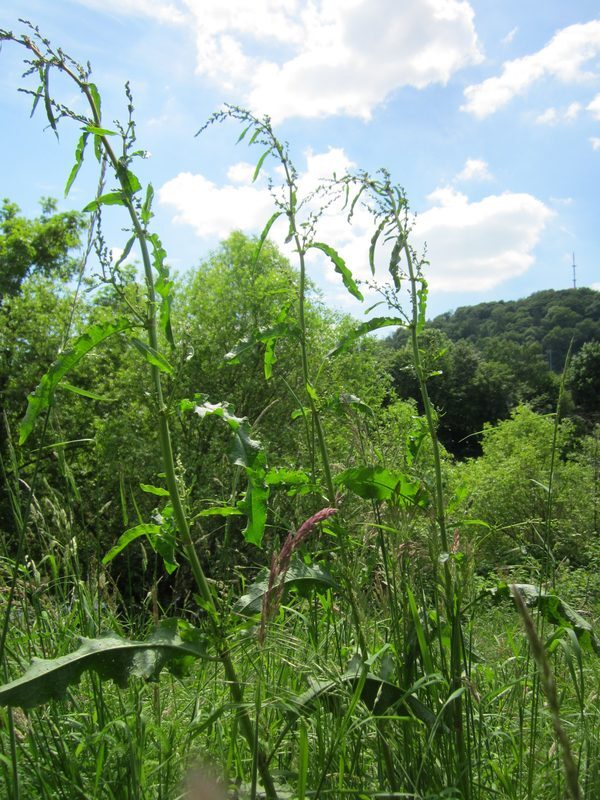
Photo: AnRo0002 · CC0 · Source
Yellow Dock
Rumex crispus
Family: Polygonaceae | Parts Used: Root
Yellow Dock is a deeply cleansing root that supports skin health, liver function, and blood vitality. Its bittersweet, cooling profile and anthraquinone content make it a gentle but effective alterative, helping the body clear toxins through the liver and bowel. Traditionally used for chronic skin conditions like psoriasis and eczema, anemia, and sluggish digestion. Its oxalate content means it requires caution with kidney conditions, and anthraquinone laxative action limits it to short-term use.
Traditional Uses
- Chronic skin conditions: psoriasis, herpes, eczema, acne
- Liver and gallbladder disorder support
- Anemia; supports iron absorption and blood vitality
- Addressing sluggish digestion
- Bile stimulation and detoxification
Properties
Key Constituents
Preparations & Dosage
- Decoction: 1-2 tsp dried root in 1 cup boiling water, or 1 oz dried root per pint of water; up to 3 cups daily.
- Tincture: 15-30 drops, up to 3 times daily.
TCM Profile: Bitter, sweetish, cool.
Spiritual & Folk Uses
Yellow dock is traditionally used in folk practice for money drawing and prosperity. Brew the root as a strong tea and use it as a floor wash, or wipe door handles with it to attract customers and financial abundance to a business.
Cautions
- Contains oxalates; avoid with kidney disease or a history of kidney stones, as oxalates may worsen the condition.
- Contains anthraquinones, which act as laxatives; not appropriate for long-term use.
- High doses may cause diarrhea and gastrointestinal cramping.
- May interact with diuretics and blood-thinning medications.
- Avoid during pregnancy.
Habitat & Growing Conditions
Native to Africa, Asia, and Europe; naturalized across North America. Grows in USDA zones 4-9. Tolerates poor and disturbed soils but prefers rich ground in full sun to partial shade.
Related Articles
Sources & Research
The Way of Herbs, Michael Tierra, p211
The New Holistic Herbal, David Hoffmann, p243
Published Research:
Rumex crispus L.: A comprehensive review on botany, traditional uses, phytochemistry, pharmacology, and safety | International Immunopharmacology (2024)
Anthelmintic potency of Rumex crispus L. extracts against Caenorhabditis elegans and non-targeted identification of their bioactive compounds | Saudi Journal of Biological Sciences (2022)
Phytochemical Composition, Antioxidant, Antiacetylcholinesterase, and Cytotoxic Activities of Rumex crispus L | International Journal of Analytical Chemistry (2021)
Water extract of Rumex crispus supports healthy bone loss by inhibiting osteoclastogenesis and inducing osteoblast mineralization | BMC Complementary and Alternative Medicine (2017)
These statements have not been evaluated by the Food and Drug Administration. This information is not intended to diagnose, treat, cure, or prevent any disease. If you are under the care of a health care provider or taking prescription medication, check with your provider before using any herbal supplement.