

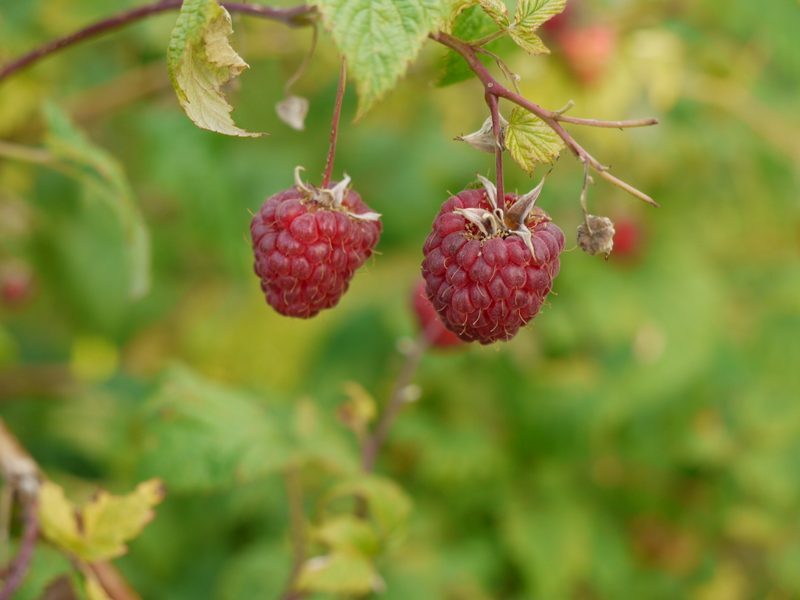
Photo: Peace656 · Public domain · Source
Raspberry Leaf
Rubus idaeus
Family: Rosaceae | Parts Used: Leaves
Raspberry Leaf is one of the most widely used herbs for female reproductive health, with a long history as a pregnancy tonic. Rich in calcium, iron, manganese, and vitamins A, B, and C, it has astringent and toning properties that address menstrual irregularities, nourish the womb during pregnancy, support labor preparation, and aid postpartum recovery. Safe and nutritive with a mild flavor, it is suitable for daily infusion and is also used to soothe gastrointestinal discomfort.
Traditional Uses
- Menstrual irregularities and cycle support
- Nourishing the womb during pregnancy
- Labor preparation (third trimester, under midwife guidance)
- Postpartum recovery
- Soothing gastrointestinal discomfort
- Overall vitality and nutritive support
Properties
Key Constituents
- Calcium
- Iron
- Manganese
- Phosphorus
- Vitamins A, B, and C
- Tannins
- Flavonoids
Preparations & Dosage
- Infusion: 1-2 tsp herb in 1 cup boiling water, or 1 oz dried herb infused in 1 quart water. Up to 3 cups daily. Safe for children.
TCM Profile: Mild, bitter, cool.
Bonnie's Notes
I use red raspberry leaf regularly to help balance my hormones.
Cautions
- Traditionally used in late pregnancy to prepare for labor, but should only be used in the third trimester and under midwife or healthcare provider guidance.
- Avoid in early pregnancy, as it may stimulate uterine contractions.
- High tannin content may cause digestive upset in large doses.
Habitat & Growing Conditions
Native to North America, growing in USDA zones 2-7. Tolerates most soils but prefers moist, well-draining soil in full sun. Grows as a perennial shrub in temperate regions, producing fruit in summer.
Related Articles
Sources & Research
The Way of Herbs, Michael Tierra, p. 184
Today's Herbal Health, Louise Tenney, p. 106
Published Research:
Ethnopharmacology of Rubus idaeus Linnaeus: A critical review on ethnobotany, processing methods, phytochemicals, pharmacological activities, and toxicological aspects | Journal of ethnopharmacology (2023)
Red Raspberry (Rubus idaeus L.) Seed Oil: A Review | Plants (2021)
Antioxidant, Anti-inflammatory and Cytotoxic Activity of Phenolic Compound Family Extracted from Raspberries (Rubus idaeus) | Antioxidants (2022)
Raspberry (Rubus idaeus L.), a Promising Alternative in the Management of Hyperglycemia and Dyslipidemias | Journal of medicinal food (2022)
These statements have not been evaluated by the Food and Drug Administration. This information is not intended to diagnose, treat, cure, or prevent any disease. If you are under the care of a health care provider or taking prescription medication, check with your provider before using any herbal supplement.