

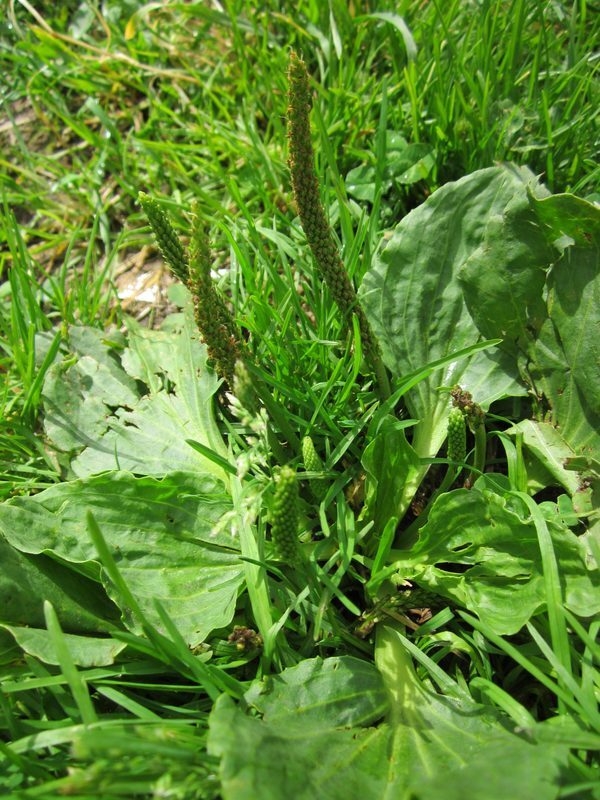
Photo: AnRo0002 · CC0 · Source
Plantain
Plantago major
Family: Plantaginaceae | Parts Used: Leaves and seeds
Plantain is one of the most common weeds in North America, found underfoot in meadows and walkways. Traditionally valued for its soothing and healing properties both internally and externally, it contains mucilage and allantoin, which support cell regeneration and reduce inflammation. It has long been used in Western and Native American traditions for urinary tract infections, liver support, and external wound care including stings, bites, and boils.
Traditional Uses
- Urinary tract infection support
- Hepatitis and liver support
- External wounds, stings, bites, and boils (poultice application)
- Anti-inflammatory action for internal and external use
Properties
Key Constituents
- Mucilage
- Allantoin
- Fatty acids
- Protein and starch
- B vitamins
- Vitamin C
- Vitamin K
- Bitters
Preparations & Dosage
- Infusion: 1-2 tsp dried herb in 1 cup boiling water, or 1 oz dried herb in 1 pint water. Take 2-3 cups daily.
- Tincture: 15-30 drops, 2-3 times daily.
- Poultice: Mash fresh plant and apply externally to stings, bites, wounds, and boils.
TCM Profile: Bland, somewhat bitter, cool.
Cautions
- Generally considered safe. May cause allergic reactions in individuals sensitive to the Plantaginaceae family.
- May lower blood pressure and blood sugar. Use with caution alongside relevant medications.
- Not recommended in medicinal doses during pregnancy without professional guidance.
Habitat & Growing Conditions
Native to North America and common throughout USDA zones 3-9. Grows as a perennial in disturbed soils, lawns, pathways, and moist areas. Tolerates full sun to partial shade. It is one of the most widespread "weeds" in the world, which makes it an accessible first-aid herb for anyone who learns to identify it.
Related Articles
Sources & Research
The Way of Herbs, Michael Tierra, p. 179
Medicinal Herbs: A Beginner's Guide, Rosemary Gladstar, p. 189
Published Research:
Plantago major in Traditional Persian Medicine and modern phytotherapy: a narrative review | Electronic physician (2018)
Chemical constituents and medical benefits of Plantago major | Biomedicine & pharmacotherapy (2017)
The Effect of Plantago major on Wound Healing in Preclinical Studies: A Systematic Review | Wound management & prevention (2021)
Antimicrobial and Other Biomedical Properties of Extracts from Plantago major, Plantaginaceae | Pharmaceuticals (2023)
These statements have not been evaluated by the Food and Drug Administration. This information is not intended to diagnose, treat, cure, or prevent any disease. If you are under the care of a health care provider or taking prescription medication, check with your provider before using any herbal supplement.