

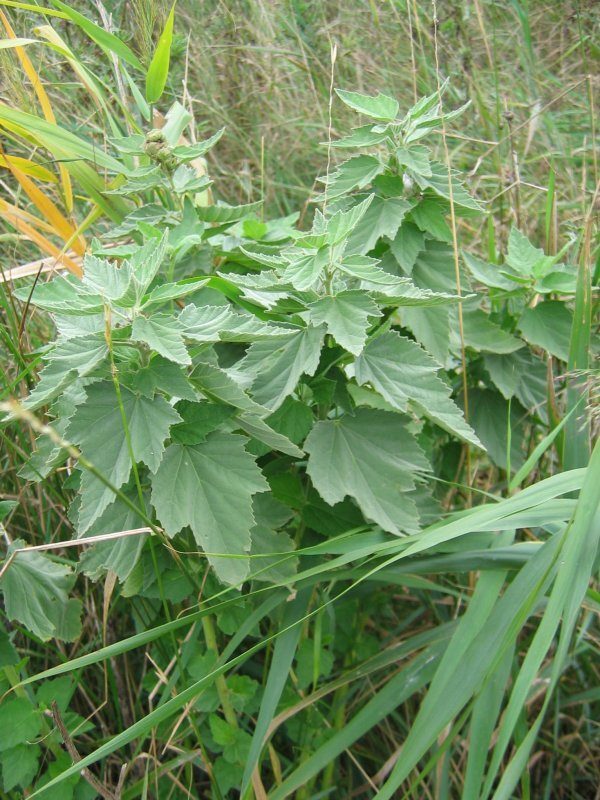
Photo: Kristian Peters -- Fabelfroh 12:58, 19 November 2006 (UTC) · CC BY-SA 3.0 · Source
Marsh Mallow
Althaea officinalis
Family: Malvaceae | Parts Used: Root and Leaf
Marsh Mallow is a deeply soothing herb known for its mucilaginous polysaccharides, which form a gentle protective coating over irritated and inflamed tissues. This makes it particularly useful in the respiratory, digestive, and urinary systems. It is also applied topically for eczema and dry, itchy skin. Used across Western and Middle Eastern traditions, both root and leaf are used, with the root carrying the highest mucilage content.
Traditional Uses
- Inflamed and irritated tissue of the respiratory system, including dry coughs and sore throat
- Inflamed and irritated tissue of the digestive system, including gastritis and ulcers
- Irritated and inflamed bowel conditions
- Bladder and kidney infections and urinary tract irritation
- Eczema and itchy, dry skin (topical)
Properties
Key Constituents
Preparations & Dosage
- Decoction (root): 1-2 tsp root simmered 10-15 minutes in 1 cup water.
- Infusion (leaf): 1-2 tsp dried leaf in 1 cup boiling water; 1-3 cups daily. Cold infusion is also effective for preserving mucilage content.
- Tincture: 15-30 drops up to 3 times daily.
- Poultice: Root or leaf applied topically for skin irritation and inflammation.
Cautions
- Generally considered safe. The mucilaginous nature of marsh mallow may slow absorption of other medications taken at the same time. Take other medications at least 1 hour before or 2 hours after consuming marsh mallow.
- May lower blood sugar; use with caution alongside diabetes medications.
- Consult a healthcare provider before use during pregnancy.
Habitat & Growing Conditions
Native to Europe, western Asia, and North Africa; now grown worldwide in temperate climates (US zones 3-9). Prefers wet or marshy areas with full sun.
Related Articles
Sources & Research
Medicinal Herbs: A Beginner's Guide, Rosemary Gladstar, p. 166
The New Holistic Herbal, David Hoffmann, p. 214
Published Research:
Isolation, structural properties, and bioactivities of polysaccharides from Althaea officinalis Linn.: A review | International Journal of Biological Macromolecules (2023)
Marsh Mallow (Althaea officinalis L.) and Its Potency in the Traditional Support for Cough | Complementary Medicine Research (2020)
Evaluation of antioxidant, enzyme inhibition, nitric oxide production inhibitory activities and chemical profiles of Althaea officinalis | Food Research International (2022)
Effects of Althaea officinalis L. and Metformin on Estradiol-Induced Polycystic Ovary Syndrome in Rats | Cell Journal (2024)
These statements have not been evaluated by the Food and Drug Administration. This information is not intended to diagnose, treat, cure, or prevent any disease. If you are under the care of a health care provider or taking prescription medication, check with your provider before using any herbal supplement.