

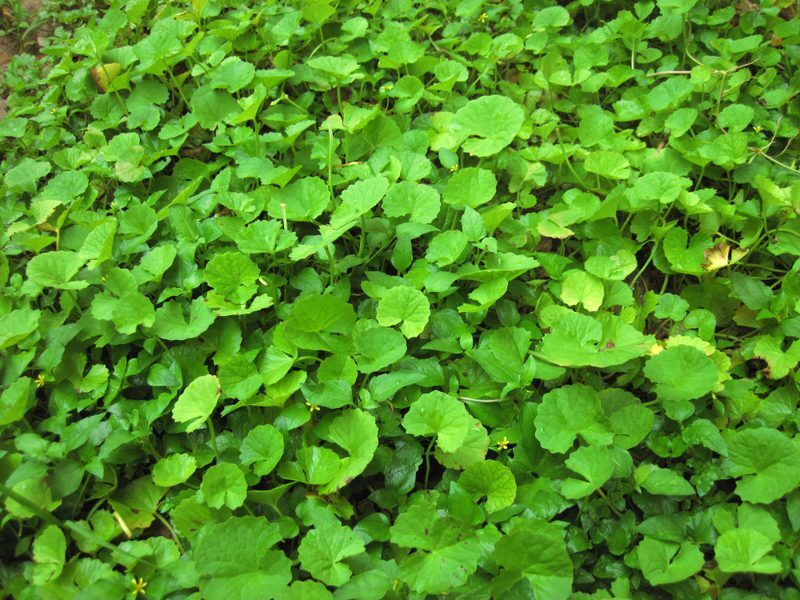
Photo: Sanjay Acharya · CC BY-SA 3.0 · Source
Gotu Kola
Centella asiatica
Family: Umbelliferae (Apiaceae) | Parts Used: Leaves
Gotu Kola, known as Mandukaparni in Ayurveda, has been used for centuries in both Ayurvedic and TCM traditions. This creeping herb thrives in tropical wetlands and is particularly valued for wound healing and cognitive support. Its active triterpenoid saponins, especially asiaticoside and madecassoside, drive its broad actions: sharpening memory, calming anxiety, purifying blood, supporting skin integrity, and improving microcirculation. It is used both internally and topically.
Traditional Uses
- Sharpens memory and supports mental function
- Traditionally used to calm anxiety and restlessness
- Stimulates appetite and supports digestive and bowel function
- Applied externally to help minimize scarring and support wound healing
- Blood purification
- Supports venous health and microcirculation
- Traditionally used for skin conditions including psoriasis, eczema, and dermatitis
- Stimulates collagen synthesis and skin tissue repair
- Supports liver function
- Neuroprotective use, including potential support during cognitive decline
- Traditionally used in Ayurveda as a longevity and brain tonic
- In TCM, used to clear heat, resolve toxicity, and support wounds
Key Constituents
- Triterpene saponins (asiaticoside, madecassoside)
- Triterpene acids
- Alkaloids
- Bitters
- Tannins
- Vitamin C
Preparations & Dosage
- Tincture: 10-30 drops up to 3 times daily. Standard tincture dose is also listed as 1 ml three times daily.
- Infusion: 1-2 tablespoons dried herb steeped in 1 cup hot water, up to 3 cups daily. Alternatively: 1-2 teaspoons dried leaf steeped 10-15 minutes.
- Standardized extract capsules: 300-680 mg three times daily.
- Topical: Creams, ointments, or fresh juice applied to skin for wound healing and scar prevention.
- Fresh leaves: Traditionally eaten in salads in Sri Lanka and parts of Southeast Asia.
Cautions
- Avoid large doses. At high amounts, gotu kola may produce narcotic effects and vertigo.
- Avoid with sedative medications, as effects may compound.
- Not recommended for individuals with liver disease.
Habitat & Growing Conditions
Native to India, Sri Lanka, South Africa, and Malaysia. Thrives in wet, marshy areas with partial shade. Suited for subtropical climates or greenhouse cultivation in temperate regions.
Related Articles
Sources & Research
Herbs: An Illustrated Encyclopedia, Kathi Keville, p. 62
Published Research:
Centella asiatica in dermatology: an overview | Phytotherapy Research (2014)
Therapeutic Potential of Centella asiatica and Its Triterpenes: A Review | Frontiers in Pharmacology (2020)
Centella asiatica in cosmetology | Postepy Dermatologii i Alergologii (2013)
A Systematic Review of the Effect of Centella asiatica on Wound Healing | International Journal of Environmental Research and Public Health (2022)
These statements have not been evaluated by the Food and Drug Administration. This information is not intended to diagnose, treat, cure, or prevent any disease. If you are under the care of a health care provider or taking prescription medication, check with your provider before using any herbal supplement.