

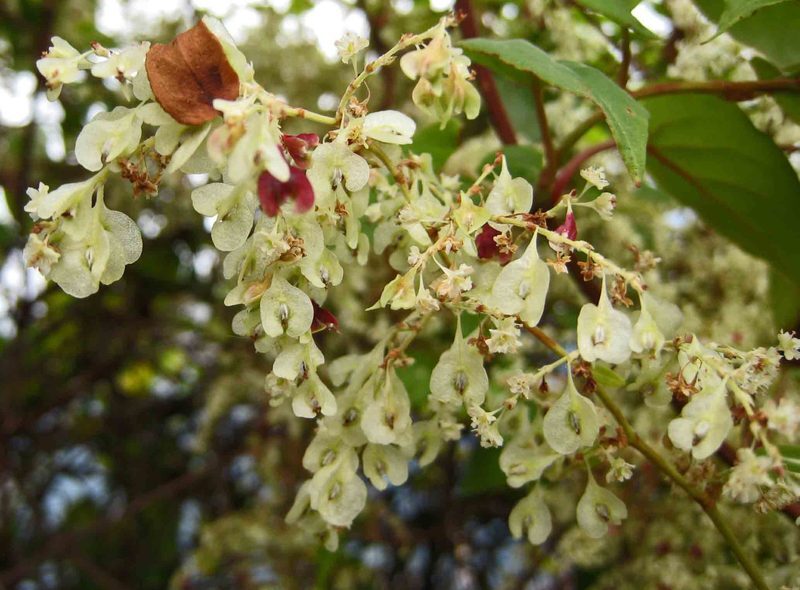
Photo: 阿橋 HQ · CC BY-SA 2.0 · Source
Fo-Ti (He Shou Wu)
Polygonum multiflorum (syn. Reynoutria multiflora)
Family: Polygonaceae | Parts Used: Root (cured)
Fo-Ti, known in Chinese as He Shou Wu, is a historically significant longevity tonic in Traditional Chinese Medicine. Traditionally used to restore vitality, support fertility, and promote strength and stamina, it is particularly valued for nourishing liver and kidney function. Chinese tradition claims it can maintain hair color and support rejuvenation with age. Only the cured (processed) root should be used; raw root carries significant hepatotoxicity risk.
Traditional Uses
- Traditionally used to restore vitality and support longevity in TCM
- Supports fertility
- Promotes strength and vigor
- Nourishes liver and kidney function
- Folkloric use: traditionally said to maintain hair color and delay greying
- Promotes youthful rejuvenation with age
Properties
- Hepatic tonic
- Alterative
- Diuretic
- Tonic
Key Constituents
- Anthraquinones
- Tannins
- Phospholipids
- Flavonoids
Preparations & Dosage
- Decoction: 1-2 teaspoons cured root in 1 cup boiling water; or 1 ounce cured root per 1 pint water.
- Tincture: 15-30 drops.
TCM Profile: Warm energy; bitter and acrid taste.
Important: Use only cured (processed) root. Raw root has documented hepatotoxicity and should not be used.
Folk Uses
In Chinese folk tradition, He Shou Wu is said to keep hair black and restore youthful color when taken consistently. The name "He Shou Wu" translates roughly to "black-haired Mr. He," referencing a legend about a man who restored his hair color and vitality by using this root.
Cautions
- Excessive use may cause diarrhea.
- Do not use during pregnancy.
- Has documented hepatotoxicity (liver toxicity) concerns, particularly with raw or improperly processed root. Use only cured root from reputable sources.
- May interact with CYP450-metabolized drugs; check with a healthcare provider if taking prescription medications.
- Avoid with known liver disease.
Habitat & Growing Conditions
Native to China. A hardy perennial in USDA zones 7-12. Prefers full sun in rich, well-drained soil.
Related Articles
Sources & Research
The Way of Herbs, Michael Tierra, p. 229
Published Research:
Polygonum Multiflorum | PubMed (2012)
Phytochemistry, pharmacology, toxicology and detoxification of Polygonum multiflorum Thunb.: a comprehensive review | Frontiers in Pharmacology (2024)
Polygonum multiflorum Thunb.: A Review on Chemical Analysis, Processing Mechanism, Quality Evaluation, and Hepatotoxicity | Frontiers in Pharmacology (2018)
Review of clinical studies of Polygonum multiflorum Thunb. and its isolated bioactive compounds | Pharmacognosy Research (2015)
These statements have not been evaluated by the Food and Drug Administration. This information is not intended to diagnose, treat, cure, or prevent any disease. If you are under the care of a health care provider or taking prescription medication, check with your provider before using any herbal supplement.