

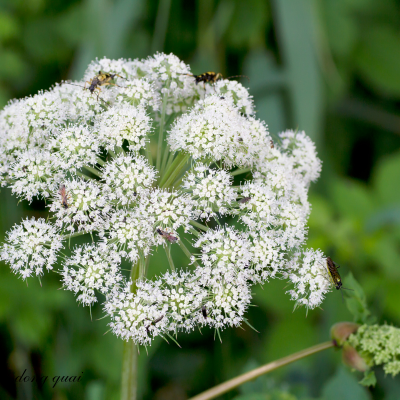
Dong Quai
Angelica sinensis
Family: Apiaceae | Parts Used: Root
Dong Quai, sometimes called "female ginseng," is a perennial root that has been cultivated in China for several thousand years for women's reproductive health. It contains polysaccharides and ferulic acid that support blood circulation, menstrual regulation, and pain relief. In Traditional Chinese Medicine, it is classified as warm, bitter, and acrid, and is used as a blood tonic to nourish and revitalize the body after fatigue or blood loss. Distinct from European angelica (A. archangelica), it has a unique phytochemical profile with immunomodulatory and hepatoprotective effects documented in modern research.
Traditional Uses
- Uterine tonic, strengthens and nourishes the uterus
- Regulates menstrual cycles
- Eases the transition through menopause
- Nourishes and revitalizes blood; traditionally used for anemia and blood deficiency
- May help ease fatigue and weakness
- Promotes blood circulation and may help ease pain
- Anti-inflammatory and antioxidant support
- Immunomodulatory and hepatoprotective effects
Key Constituents
- Polysaccharides
- Ferulic acid
- Ligustilide
- Essential oil
Preparations & Dosage
Cautions
- Do not use during pregnancy.
- Avoid with blood-thinning medications, including aspirin, warfarin, and related drugs.
- Contraindicated with bleeding disorders.
Habitat & Growing Conditions
Native to the high-altitude regions of China, Japan, and Korea. Cultivated in US zones 5-9. Prefers moist, cool soil with full to partial shade. It is a perennial that has been in continuous cultivation in China for several thousand years.
Related Articles
Sources & Research
The Way of Herbs, Michael Tierra, p. 225
Published Research:
Extraction, structure, pharmacological activities and drug carrier applications of Angelica sinensis polysaccharide | International Journal of Biological Macromolecules (2021)
Angelica sinensis in China: A review of botanical profile, ethnopharmacology, phytochemistry and chemical analysis | Journal of Ethnopharmacology (2016)
Pharmacological action of Angelica sinensis polysaccharides: a review | Frontiers in Pharmacology (2024)
Angelica sinensis and osteoarthritis: a natural traditional link? | Bio-Medical Materials and Engineering (2015)
These statements have not been evaluated by the Food and Drug Administration. This information is not intended to diagnose, treat, cure, or prevent any disease. If you are under the care of a health care provider or taking prescription medication, check with your provider before using any herbal supplement.