

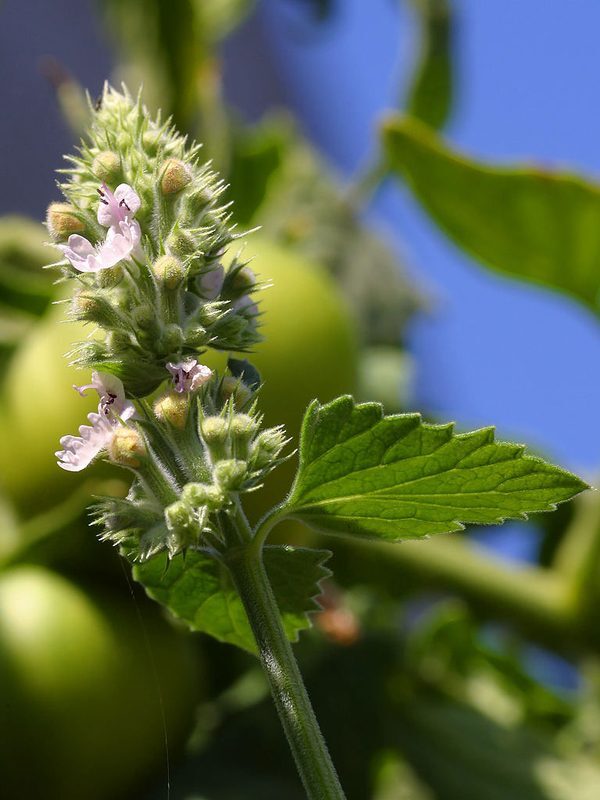
Photo: Jon Sullivan · Public domain · Source
Catnip
Nepeta cataria
Family: Labiatae (Mint family) | Parts Used: Leaves and flowers
Catnip is a soothing, aromatic herb best known for its calming effects on the nervous system and its gentle support for colds, fevers, and digestive upset, especially in children. It possesses a light, minty flavor and grows naturally in Europe but has naturalized throughout North America. Key constituents include volatile oils (citronellol, geraniol, citral), bitter principles, and tannins.
Traditional Uses
- May help ease tension and stress
- Supports cold, flu, and fever management (especially beneficial for children)
- Eases indigestion and digestive complaints
- Promotes sweating during fevers (diaphoretic)
- Promotes restful sleep
Properties
Key Constituents
- Volatile oils (citronellol, geraniol, citral)
- Bitter principle
- Tannins
Preparations & Dosage
- Infusion: 2 teaspoons dried herb steeped in 1 cup boiling water, or 1 ounce dried herb per pint of water. Take up to 3 cups daily.
- Tincture: 15-30 drops up to 3 times daily.
TCM Profile: Spicy, bitter, cool.
Spiritual & Folk Uses
Catnip is traditionally used in love-drawing rituals. It can be used to dress candles to attract affection.
Cautions
- Consult with a qualified healthcare provider before starting any herbal regimen, especially if pregnant, nursing, taking medication, or have existing health conditions.
Habitat & Growing Conditions
Native to Europe, naturalized in North America. Grows in USDA zones 3-9. Prefers well-drained soil and full sun; adapts to partial shade.
Related Articles
Sources & Research
The Way of Herbs, Michael Tierra, p114
The New Holistic Herbal, David Hoffmann, p189
Herbs: An Illustrated Encyclopedia, Kathi Keville, p132
Published Research:
Behavioral and electrophysiological study of Nepeta cataria | Fish Physiology and Biochemistry (2024)
Assessment of genetic diversity and biological activity in Nepeta cataria | Chemistry & Biodiversity (2023)
Phytochemical profiling and potential antioxidant plant: Nepeta cataria | Frontiers in Plant Science (2022)
Repellency assessment of Nepeta cataria essential oils on Aedes aegypti | Scientific Reports (2019)
These statements have not been evaluated by the Food and Drug Administration. This information is not intended to diagnose, treat, cure, or prevent any disease. If you are under the care of a health care provider or taking prescription medication, check with your provider before using any herbal supplement.