

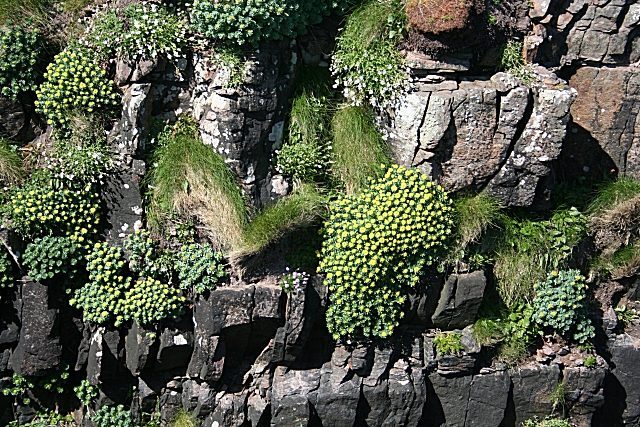
Photo: Anne Burgess · CC BY-SA 2.0 · Source
Rhodiola
Rhodiola rosea
Family: Crassulaceae | Parts Used: Root
Rhodiola is a well-studied adaptogenic root with traditional roots in northern Europe and Asia, where it has long been used to help the body handle physical and mental stress. It supports nervous system resilience, reduces fatigue, and supports mood during high-demand periods. The root also has applications in endocrine and immune health, with documented support for cognitive performance and cardiovascular function.
Traditional Uses
- Stress management and building resilience to physical and mental demands
- Anxiety relief
- Fatigue reduction, particularly during burnout and high-demand periods
- Depression support
- Vitality and energy enhancement
- Support for immune function
- Cognitive performance and concentration
Key Constituents
Preparations & Dosage
- Root decoction: 1-2 tsp root in 1 cup boiling water, or 1 oz dried root per 1 pint of water. Up to three times daily.
- Tincture: 15-30 drops, up to three times daily.
Habitat & Growing Conditions
Native to cold, rocky mountainous areas in northern Europe and Asia. Can be grown in colder climates (US zones 2-7). Prefers colder climates, rocky areas, and full sun.
Cautions
- Generally well-tolerated. May cause dizziness, dry mouth, or insomnia in some individuals, particularly at higher doses.
- May interact with antidepressants, blood pressure medications, diabetes drugs, and immunosuppressants.
- Not recommended during pregnancy or breastfeeding due to insufficient safety data.
- Has mild stimulant effects; avoid taking late in the day if sensitive to stimulants.
Related Articles
Sources & Research
Published Research:
Effects of Rhodiola Rosea Supplementation on Exercise and Sport: A Systematic Review | Frontiers in nutrition (2022)
The Effectiveness of Rhodiola rosea L. Preparations in Alleviating Various Aspects of Life-Stress Symptoms and Stress-Induced Conditions | Molecules (Basel, Switzerland) (2022)
Anti-inflammatory effects of Rhodiola rosea L.: A review | Biomedicine & Pharmacotherapy (2020)
Rosenroot (Rhodiola rosea): traditional use, chemical composition, pharmacology and clinical efficacy | Phytomedicine (2010)
These statements have not been evaluated by the Food and Drug Administration. This information is not intended to diagnose, treat, cure, or prevent any disease. If you are under the care of a health care provider or taking prescription medication, check with your provider before using any herbal supplement.