

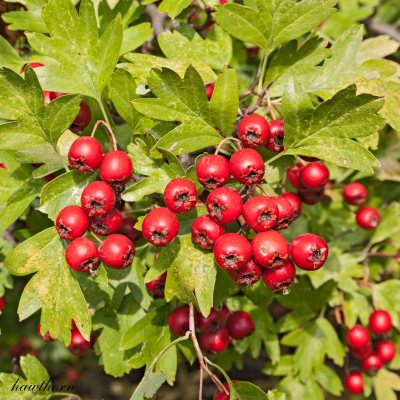
Hawthorn
Crataegus laevigata
Family: Rosaceae | Parts Used: Fruit, flower, leaf
Hawthorn is a well-documented cardiovascular herb that strengthens and nourishes the heart. Traditionally valued in Western herbalism and TCM as a tonic for hypertension, palpitations, and recovery from cardiac strain, its high flavonoid content, including quercetin, rutin, and procyanidins, provides antioxidant and cardioprotective effects. It also supports connective tissue repair for ligaments and joints, making it useful beyond strictly cardiac applications.
Traditional Uses
- Heart and circulatory tonic
- Traditionally used for hypertension support
- Traditionally used for palpitations management
- Supports recovery from cardiac strain
- Ligament and connective tissue repair support
- Joint support
- Antioxidant and cardioprotective properties
Properties
Key Constituents
- Flavonoids
- Quercetin
- Rutin
- Procyanidins
- Cratelegin
- Triterpenoids
- Choline
- Acetylcholine
- Vitamins B and C
Preparations & Dosage
- Infusion: 1-2 teaspoons herb in 1 cup boiling water, or 1 oz dried herb per pint of water. Take 2-3 cups daily.
- Tincture: 15-30 drops up to 3 times daily.
Hawthorn is considered safe for long-term use as a tonic. Benefits typically build over weeks of consistent use.
Cautions
- Individuals taking heart medications, including digoxin, beta-blockers, or antihypertensives, should consult their physician before supplementing with hawthorn.
Habitat & Growing Conditions
Grows worldwide in many species and varieties. US zones 4-8. Prefers well-drained, slightly acidic soil. A thorny shrub or small tree commonly found at woodland edges and hedgerows across Europe and North America.
Related Articles
Sources & Research
Medicinal Herbs: A Beginner's Guide, Rosemary Gladstar, p. 144
The New Holistic Herbal, David Hoffmann, p. 206
Published Research:
Effects of a Scutellaria baicalensis/Crataegus laevigata, magnesium and chromium supplement on stressed individuals | Journal of Psychopharmacology (2025)
Crataegus laevigata decreases neutrophil elastase and has hypolipidemic effect: a randomized, double-blind, placebo-controlled trial | Phytomedicine (2011)
Antioxidant capacity of polyphenolic extracts from leaves of Crataegus laevigata and Crataegus monogyna (Hawthorn) | Journal of Agricultural and Food Chemistry (2003)
Crataegus laevigata Suppresses LPS-Induced Oxidative Stress during Inflammatory Response in Human Keratinocytes | Molecules (2021)
These statements have not been evaluated by the Food and Drug Administration. This information is not intended to diagnose, treat, cure, or prevent any disease. If you are under the care of a health care provider or taking prescription medication, check with your provider before using any herbal supplement.