

Photo: CC BY 2.5 · Source
Feverfew
Tanacetum parthenium
Family: Compositae | Parts Used: Whole herb
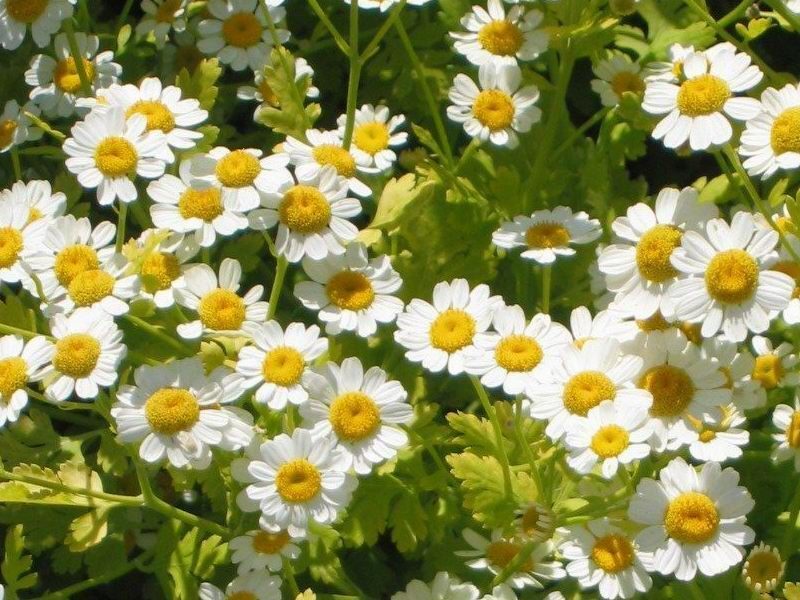
Feverfew is a traditional herb best known for supporting those prone to migraines and recurring headaches. The plant has a distinctly bitter taste and daisy-like flowers. It has been used in Western herbalism to support the nervous system and respiratory tract, and is historically valued as a women's herb for its emmenagogue properties. Most effective when used consistently over time to maintain head and nervous system balance.
Traditional Uses
- Migraine and recurring headache support (most effective with regular use)
- Coughs, wheezing, and difficulty breathing
- Supports women's health through emmenagogue action
- Promotes head and nervous system balance
- May help ease chronic tension
Properties
- Bitter
- Carminative
- Aperient
- Nervine
- Emmenagogue
Key Constituents
Preparations & Dosage
Cautions
- Promotes menstruation; may increase flow and cramping. Do not use during pregnancy.
- Contraindicated with anticoagulant medications.
- May cause contact dermatitis in those sensitive to the Asteraceae/Compositae family.
- Those with bleeding disorders should avoid this herb.
Habitat & Growing Conditions
Native to southeastern Europe; now naturalized throughout Europe, Australia, and North America (USDA zones 5-10). Prefers moist, well-drained, fertile soil in full sun to partial shade.
Related Articles
Sources & Research
A Modern Herbal, Mrs. M. Grieve, p. 185
Herbs: An Illustrated Encyclopedia, Kathi Keville, p. 184
Published Research:
The efficacy and safety of feverfew (Tanacetum parthenium L.): an update of a systematic review | Public Health Nutrition (2000)
Systematic review and meta-analysis of Tanacetum parthenium: evaluating its efficacy in migraine relief | Natural Product Research (2025)
Exploring the Phytochemistry, Signaling Pathways, and Mechanisms of Action of Tanacetum parthenium (L.) Sch.Bip. | Biomedicines (2024)
Tanacetum parthenium and Salix alba (Mig-RL) combination in migraine prophylaxis: a prospective, open-label study | Clinical Drug Investigation (2006)
These statements have not been evaluated by the Food and Drug Administration. This information is not intended to diagnose, treat, cure, or prevent any disease. If you are under the care of a health care provider or taking prescription medication, check with your provider before using any herbal supplement.