

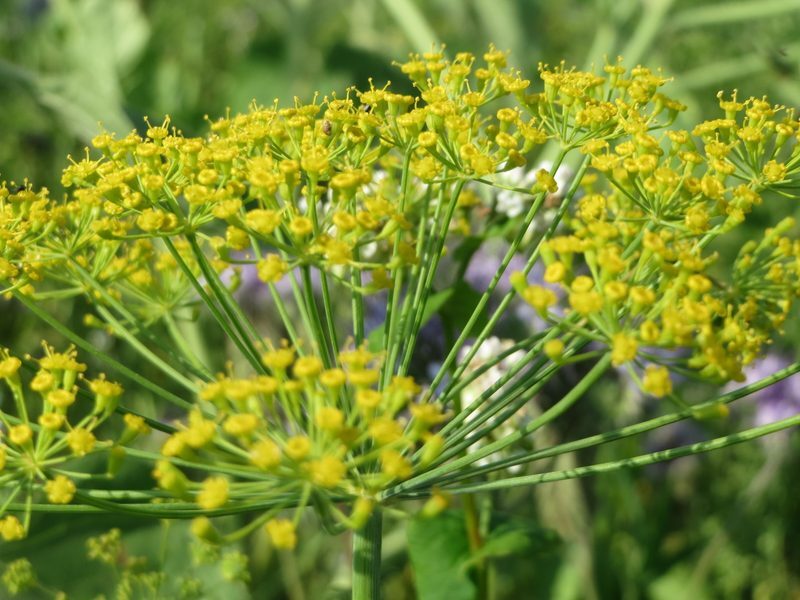
Photo: AnRo0002 · CC0 · Source
Dill
Anethum graveolens
Family: Umbelliferae | Parts Used: Seeds
Dill is a fragrant and comforting herb traditionally used to support digestion, ease abdominal discomfort, and promote restful sleep. Its seeds are gently calming and carminative, making them a go-to for colic, gas, and flatulence, especially in children. It also supports lactation in nursing mothers and has a long history in Western, Middle Eastern, and Ayurvedic traditions.
Traditional Uses
- Indigestion, gas, and flatulence
- Abdominal pain and cramping, particularly in children
- Colic management
- Supports lactation in nursing mothers (galactagogue)
- Promotes sleep, especially beneficial for infants
Key Constituents
- Essential oil
- Fatty oil
- Furanocoumarins
- Organic acids
Preparations & Dosage
Folk Uses
In Europe, small pillows filled with dill were placed in cradles so the scent would help babies get to sleep. This folk practice takes advantage of the herb's gently calming aromatic profile.
Cautions
- Not recommended in medicinal doses during pregnancy, as it may stimulate menstruation.
- Medicinal doses may increase sensitivity to sunlight due to furanocoumarin content.
- May have mild estrogenic effects. Use with caution in hormone-sensitive conditions.
- Essential oil should be used in diluted form only.
- Generally considered safe as a culinary herb.
Habitat & Growing Conditions
Native to southwestern Asia and the Mediterranean region, now naturalized throughout Europe and North America. Grows in US zones 3-11. Prefers full sun and rich, well-drained soil. Direct sow is preferred, as dill dislikes transplanting. It is an annual that reseeds readily.
Related Articles
Sources & Research
The Way of Herbs, Michael Tierra, p. 130
The New Holistic Herbal, David Hoffmann, p. 196
Herbs: An Illustrated Encyclopedia, Kathi Keville, p. 36
Published Research:
Anethum graveolens L. (Dill) Effect on Human Lipid Profile: An Updated Systematic Review | Current Problems in Cardiology (2022)
The effects of Anethum graveolens (dill) supplementation on lipid profile and glycemic control: a systematic review | Critical Reviews in Food Science and Nutrition (2022)
Effect of dill (Anethum Graveolens Linn) seed on the duration of labor: A systematic review | Complementary Therapies in Clinical Practice (2020)
The Role of Anethum graveolens L. (Dill) in the Management of Diabetes | Journal of Tropical Medicine (2016)
These statements have not been evaluated by the Food and Drug Administration. This information is not intended to diagnose, treat, cure, or prevent any disease. If you are under the care of a health care provider or taking prescription medication, check with your provider before using any herbal supplement.