

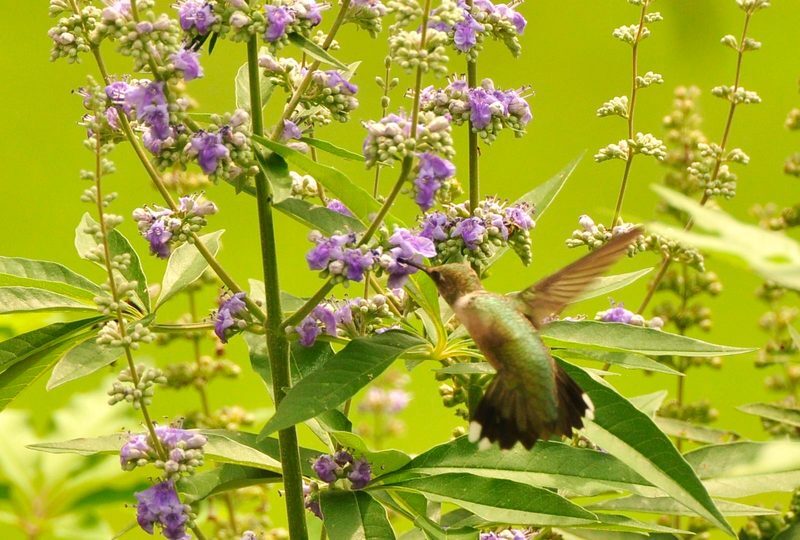
Photo: jeffreyw · CC BY 2.0 · Source
Chaste Tree
Vitex agnus-castus
Family: Verbenaceae | Parts Used: Fruit (berries)
Chaste Tree, also known as Vitex, is a well-documented herb for supporting hormonal balance in women. It works by gently influencing the pituitary gland to promote progesterone production and balance estrogen levels, making it traditionally useful for PMS, menstrual irregularity, fertility, and menopausal transitions. Its cooling and bitter qualities support the reproductive system and the endocrine system. Results typically require at least three months of consistent use.
Traditional Uses
- Corrects female hormone imbalances, particularly estrogen and progesterone
- Reduces PMS symptoms including breast pain, moodiness, and headaches
- Supports menstrual regularity and reestablishes normal cycles
- May enhance fertility
- Supports menopausal transitions
- Traditionally used for bone fracture healing
- Restores equilibrium to the reproductive system
Properties
Key Constituents
- Volatile Oil
- Glycosides
- Flavonoids
- Castine
Preparations & Dosage
- Infusion: 1 tsp berries steeped in 1 cup boiling water, taken 3 times daily; or 1 oz dried herb per 1 pint water.
- Tincture: 15-30 drops taken 3 times daily.
- Dried fruit extract: 30-40 mg daily.
- Dried herb: 3-6 g daily.
- Note: Requires at least 3 months (3 full menstrual cycles) for full effect. Capsules, tinctures, and liquid extracts are all available commercially.
TCM Profile: Bitter, acrid, cool.
Cautions
- Not safe for women with hormone-sensitive conditions, including breast, uterine, or ovarian cancer.
- Do not use during pregnancy or breastfeeding.
- Not recommended for post-menopausal women.
- Do not use with oral contraceptives or hormone replacement therapy.
- May interfere with progesterone-containing medications. Speak with your health care provider before using.
- May interact with dopamine-related medications.
- Mild side effects may include nausea and itchy rash.
Habitat & Growing Conditions
Native to southern Europe and western Asia. Grows in US zones 6-9. Prefers well-drained, fertile soil in full sun.
Related Articles
Sources & Research
The Way of Herbs, Michael Tierra, p. 204
The New Holistic Herbal, David Hoffmann, p. 191
Herbs: An Illustrated Encyclopedia, Kathi Keville, p. 209
Published Research:
Vitex agnus-castus extracts for female reproductive disorders: a systematic review of clinical trials | Planta Medica (2013)
Vitex agnus castus for premenstrual syndrome and premenstrual dysphoric disorder: a systematic review | Archives of Women's Mental Health (2017)
The traditional support for premenstrual syndrome with preparations of Vitex agnus castus: a systematic review and meta-analysis | American Journal of Obstetrics and Gynecology (2017)
Vitex agnus castus effects on hyperprolactinaemia | Frontiers in Endocrinology (2023)
These statements have not been evaluated by the Food and Drug Administration. This information is not intended to diagnose, treat, cure, or prevent any disease. If you are under the care of a health care provider or taking prescription medication, check with your provider before using any herbal supplement.