

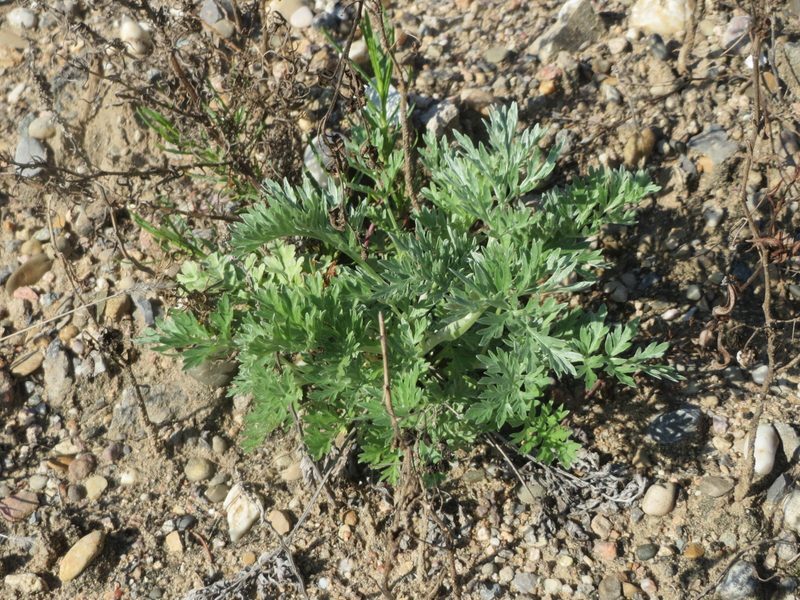
Photo: AnRo0002 · CC0 · Source
Wormwood
Artemisia absinthium
Family: Compositae | Parts Used: Leaf and flowering head
Wormwood is a fiercely bitter herb with a long history of use for expelling intestinal parasites and stimulating digestive function. Its cold, pungent nature and bitter sesquiterpene content make it potent in small doses. Traditionally used in Western and Middle Eastern herbalism for worm removal and gallbladder support. The FDA classifies it as dangerous, and occasional, cautious use is the appropriate approach. There are other, safer herbs that accomplish similar goals.
Traditional Uses
- Removal of internal worms and intestinal parasites
- Gallbladder support, including prevention and release of gallstones
- Stimulating digestive fire and addressing sluggish digestion
Properties
Key Constituents
Preparations & Dosage
- Medicinal use: Used cautiously in small amounts only; specific dosage kept minimal due to safety profile. Occasional use only.
- Incense: Burned for spiritual protection (see Spiritual Uses below).
TCM Profile: Bitter, cold.
When used in alcoholic beverages, the thujone content must be removed to comply with regulations.
Spiritual & Folk Uses
Wormwood is traditionally used for protection. It can be added to incense and burned to protect the home from unwanted influences.
Bonnie's Notes
Since there are other, safer herbs available for similar purposes, I generally don't use wormwood for medicinal work. It's useful to know about, but I reach for it rarely.
Cautions
- The FDA classifies wormwood as dangerous.
- Occasional, cautious use only. Do not use in large doses.
- Avoid long-term use.
- Avoid during pregnancy.
- Avoid with seizure disorders; thujone may lower seizure threshold.
- Thujone content must be removed when used in alcoholic beverages.
Habitat & Growing Conditions
Native to Europe. Cultivable in USDA zones 4-9. Prefers well-drained soil in full sun to partial shade.
Related Articles
Sources & Research
The Way of Herbs, Michael Tierra, p209
The New Holistic Herbal, David Hoffmann, p243
Herbs: An Illustrated Encyclopedia, Kathi Keville, p47
Published Research:
Effects of Artemisia absinthium on broiler chicken coccidiosis: a systematic review and meta-analysis | Avian Pathology (2024)
Bioactive Compounds, Pharmacological Actions, and Pharmacokinetics of Wormwood (Artemisia absinthium) | Antibiotics (2020)
Artemisia absinthium L.: Importance in the History of Medicine, the Latest Advances in Phytochemistry and Therapeutics | Plants (2020)
Essential Oil and Smoke Components of Artemisia absinthium and Hagenia abyssinica | International Journal of Food Science (2024)
These statements have not been evaluated by the Food and Drug Administration. This information is not intended to diagnose, treat, cure, or prevent any disease. If you are under the care of a health care provider or taking prescription medication, check with your provider before using any herbal supplement.