

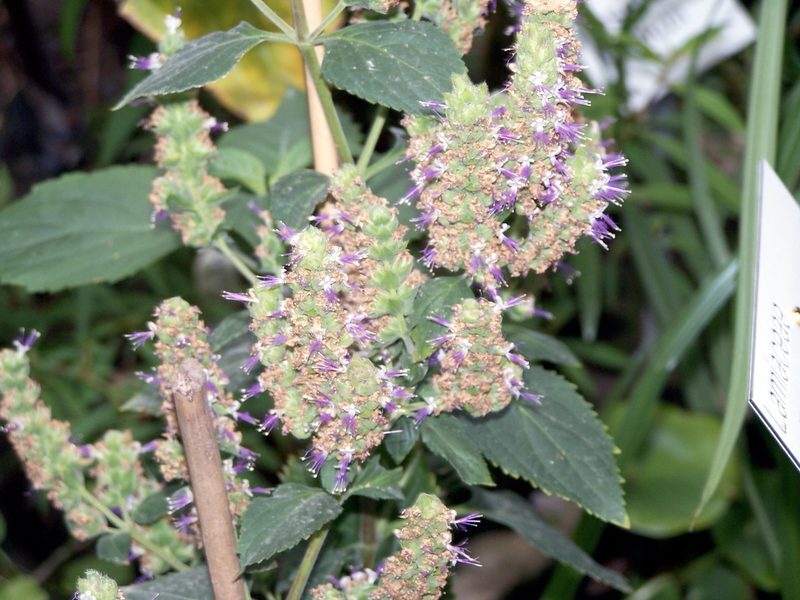
Photo: No machine-readable author provided. Valérie75 assumed (based on copyright claims). · CC BY-SA 3.0 · Source
Patchouli
Pogostemon cablin
Family: Lamiaceae | Parts Used: Leaf
Patchouli is a tropical herb native to Southeast Asia, known across Southeast Asian, Ayurvedic, and TCM traditions for its deeply earthy, musky aroma. Its primary terpenoid, patchouli alcohol, gives the plant its characteristic scent and stabilizing qualities. Historically traded on the ancient spice routes, it was used to protect textiles, as a perfume fixative, and for various medicinal applications. Today it is most widely used in spiritual work for grounding, love drawing, and money attraction.
Traditional Uses
- Spiritual work: grounding, attraction, love drawing, and money drawing
- Stabilizing and grounding during periods of restlessness or scattered focus
- Anchoring intentions in manifestation practice
- Added to spiritual baths, mojo bags, and incense blends
- Perfume and fragrance fixative (the scent deepens over time)
- Historically used to protect silk and wool textiles during trade
Spiritual & Folk Uses
In folk traditions across Southeast Asia, the Caribbean, and West Africa-derived practices, patchouli is used for attraction work, specifically for drawing love and abundance. It is added to spiritual baths or mojo bags when working toward romance or financial goals. Dried leaf burned as incense is traditionally used for money drawing and to keep intentions anchored. I use it frequently in my own spiritual work for attraction.
Preparations
- Spiritual bath: Add dried patchouli leaf to bath water for grounding and attraction work.
- Mojo bag: Include dried leaf in a cloth bag with other botanicals to carry an intention.
- Incense: Burn dried and powdered leaf alone or blend with other herbs for money and attraction work.
- Essential oil (topical, diluted): Apply in a carrier oil as a personal fragrance or for grounding. Do not ingest.
Bonnie's Notes
I use patchouli frequently in spiritual work for attraction. It is a staple in my practice, and one of the most versatile herbs for both love and money work.
Cautions
- Generally safe for topical use when diluted in a carrier oil. Undiluted essential oil may cause skin irritation or allergic reactions in sensitive individuals.
- Essential oil should not be ingested.
- Not recommended in medicinal doses during pregnancy.
- May have mild sedative effects. Use caution when driving or operating machinery after use.
- Avoid combining with pharmaceutical sedatives.
Habitat & Growing Conditions
Native to tropical Asia, particularly the Philippines, India, and Malaysia. Grows in USDA zones 10-11. Requires full sun and consistent daily watering. Cultivated commercially for essential oil production across Southeast Asia.
Related Articles
Sources & Research
Published Research:
Pharmacological activities and mechanisms of action of Pogostemon cablin Benth: a review | Chinese Medicine (2021)
Traditional potential of Pogostemon cablin herb: a comprehensive review | Pharmaceutical Patent Analyst (2022)
Biosynthesis and metabolism regulation of terpenoids in Pogostemon cablin: a review | China Journal of Chinese Materia Medica (2021)
Traditional Uses, Phytochemistry, Pharmacology, Quality Control, Industrial Application, Pharmacokinetics and Network Pharmacology of Pogostemon cablin | The American Journal of Chinese Medicine (2022)
These statements have not been evaluated by the Food and Drug Administration. This information is not intended to diagnose, treat, cure, or prevent any disease. If you are under the care of a health care provider or taking prescription medication, check with your provider before using any herbal supplement.