

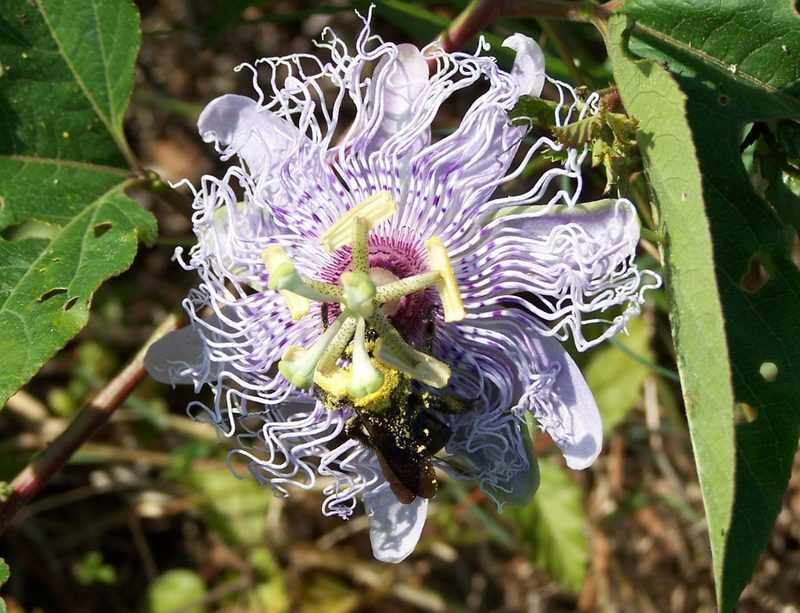
Photo: CC BY-SA 3.0 · Source
Passionflower
Passiflora incarnata
Family: Passifloraceae | Parts Used: Dried leaves; fruit (consumed as food)
Passionflower is a climbing vine native to the southeastern United States, with a long history of use in Native American and South American herbalism. It is primarily valued as a mild sedative for the nervous system, particularly for insomnia tied to anxiety and overthinking. Unlike stronger sedatives, it does not typically cause morning grogginess. Also traditionally used for shingles pain and to lower blood pressure.
Traditional Uses
- Insomnia, particularly when caused by anxiety or an overactive mind
- Anxiety reduction
- Nervous system disorder support
- Shingles relief
- Pain relief (anodyne)
- Blood pressure lowering (hypotensive)
Properties
Key Constituents
Preparations & Dosage
- Infusion: 1-2 teaspoons dried herb per cup of boiling water, or 1 oz dried herb per pint of water. Consume 1-2 cups daily, with one cup taken before bed for sleep support.
- Tincture: 15-30 drops taken 1-2 times daily. Take one dose before bed as needed for sleep.
TCM Profile: Leaves are bitter and cool; fruit is sour, sweet, and cool.
Cautions
- Avoid large doses, as they may cause nausea and vomiting.
- Do not combine with pharmaceutical sedatives or sleep medications without consulting a healthcare provider.
- Avoid during pregnancy and breastfeeding.
- Consult a healthcare provider before use if taking any prescription medications.
Habitat & Growing Conditions
Native to the southeastern United States. Also grows in Australia. Hardy in USDA zones 7-9. Prefers sandy loam and full sun. Grows as a climbing vine and produces edible fruit.
Related Articles
Sources & Research
The Way of Herbs, Michael Tierra, p. 175
The New Holistic Herbal, David Hoffmann, p. 221
Herbs: An Illustrated Encyclopedia, Kathi Keville, p. 140
Published Research:
Passiflora incarnata in Neuropsychiatric Disorders: A Systematic Review | Nutrients (2020)
Role Identification of Passiflora Incarnata Linnaeus: A Mini Review | Journal of Menopausal Medicine (2017)
Passiflora incarnata L.: ethnopharmacology, clinical application, safety and evaluation of clinical trials | Journal of Ethnopharmacology (2013)
Anxiolytic Potential of Passiflora incarnata in Oral Surgery: Mechanisms, Evidence and Clinical Application | Pakistan Journal of Biological Sciences (2025)
These statements have not been evaluated by the Food and Drug Administration. This information is not intended to diagnose, treat, cure, or prevent any disease. If you are under the care of a health care provider or taking prescription medication, check with your provider before using any herbal supplement.