

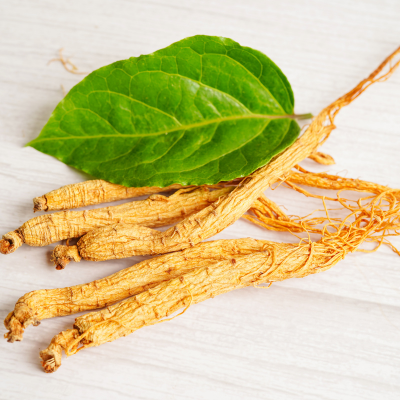
Ginseng
Panax ginseng
Family: Araliaceae | Parts Used: Root
Ginseng is one of the most widely used adaptogens in herbal medicine, with deep roots in both Eastern and Western practices. The root functions as a rejuvenating tonic, particularly suited for individuals with depleted or weakened constitutions. Its key active compounds, ginsenosides and polysaccharide glycans, drive its actions on circulation, cognitive function, stamina, and stress response. Used in TCM and Native American herbalism, ginseng has one of the most extensive bodies of clinical research of any botanical.
Traditional Uses
- Supports stress management and resilience in depleted individuals
- Traditionally used for fatigue and low vitality
- Circulatory tonic, including cardiac support
- Enhances stamina and physical endurance
- Supports cognitive function and mental clarity
- Alterative and hepatic tonic properties
- Used in TCM as a rejuvenating root for weakened constitutions
Properties
Key Constituents
Preparations & Dosage
- Root decoction: 1-2 teaspoons dried root in 1 cup boiling water, or 1 oz dried root per pint of water. Take up to three times daily.
- Tincture: 15-30 drops up to three times daily.
Best suited for individuals with weak or depleted constitutions. Use cautiously with overstimulation-prone individuals.
Cautions
- Avoid concurrent use with caffeine or other stimulants.
- Use mindfully in individuals prone to overstimulation, anxiety, or high blood pressure.
- May interact with blood thinners, diabetes medications, and hormone-sensitive conditions. Consult your provider before use.
- Not recommended during pregnancy without medical guidance.
Habitat & Growing Conditions
Thrives in temperate climates worldwide, including US zones 3-7. Prefers well-draining soil with 75-80% shade. Slow-growing and wild-harvested populations are under pressure; sustainably cultivated sources are preferred.
Related Articles
Sources & Research
The Way of Herbs, Michael Tierra, p. 228
Published Research:
Panax ginseng and Panax quinquefolius: From pharmacology to toxicology | Food and Chemical Toxicology (2017)
Panax ginseng | American Family Physician (2003)
Chemical constituents of Panax ginseng and Panax notoginseng explain why they differ in traditional efficacy | Pharmacological Research (2020)
Overview of Panax ginseng and its active ingredients protective mechanism on cardiovascular diseases | Journal of Ethnopharmacology (2024)
These statements have not been evaluated by the Food and Drug Administration. This information is not intended to diagnose, treat, cure, or prevent any disease. If you are under the care of a health care provider or taking prescription medication, check with your provider before using any herbal supplement.